After 10 Years of Teaching Sewing, This is The One Thing Most Beginners Get Wrong
I’m sure you’ve had this feeling before… standing in front of your wardrobe – probably running late – and the thing that you want to pull out and put on just doesn’t exist. You have some ‘versions’ on hangers that try to be what you want, but they’re really not.
Not the garment you have in your head. So you pull out the nearest thing and think to yourself for the gazillionth time I should just make it.
Perhaps you have tried. You bought the fabric – the stunning piece you found while doomscrolling Instagram late at night and felt certain was perfect – but it’s been sat in your fabric stash since, waiting for you to have the confidence that hasn’t yet arrived.
Or maybe you did make a thing. Followed the instructions that came with a pattern, sewed every step as directed and then wore the finished garment one. Because you felt a bit disappointed with it, and it’s been pushed to the back of your wardrobe since.
I have been there – more than once – and it’s usually because I was swayed by all the versions I’d been drooling over on Instagram.
A few years ago, I fell hard for the Hazel dress by Veronica Tucker. I had lusted after it for months and found a gorgeous fabric from The New Craft House which I ordered and shipped to my Dad’s. It was going to be the perfect, most fabulous dream summer dress.
The pattern was printed out, and I cut the fabric on the carpeted floor of the living room back home and I really enjoyed sewing it up.
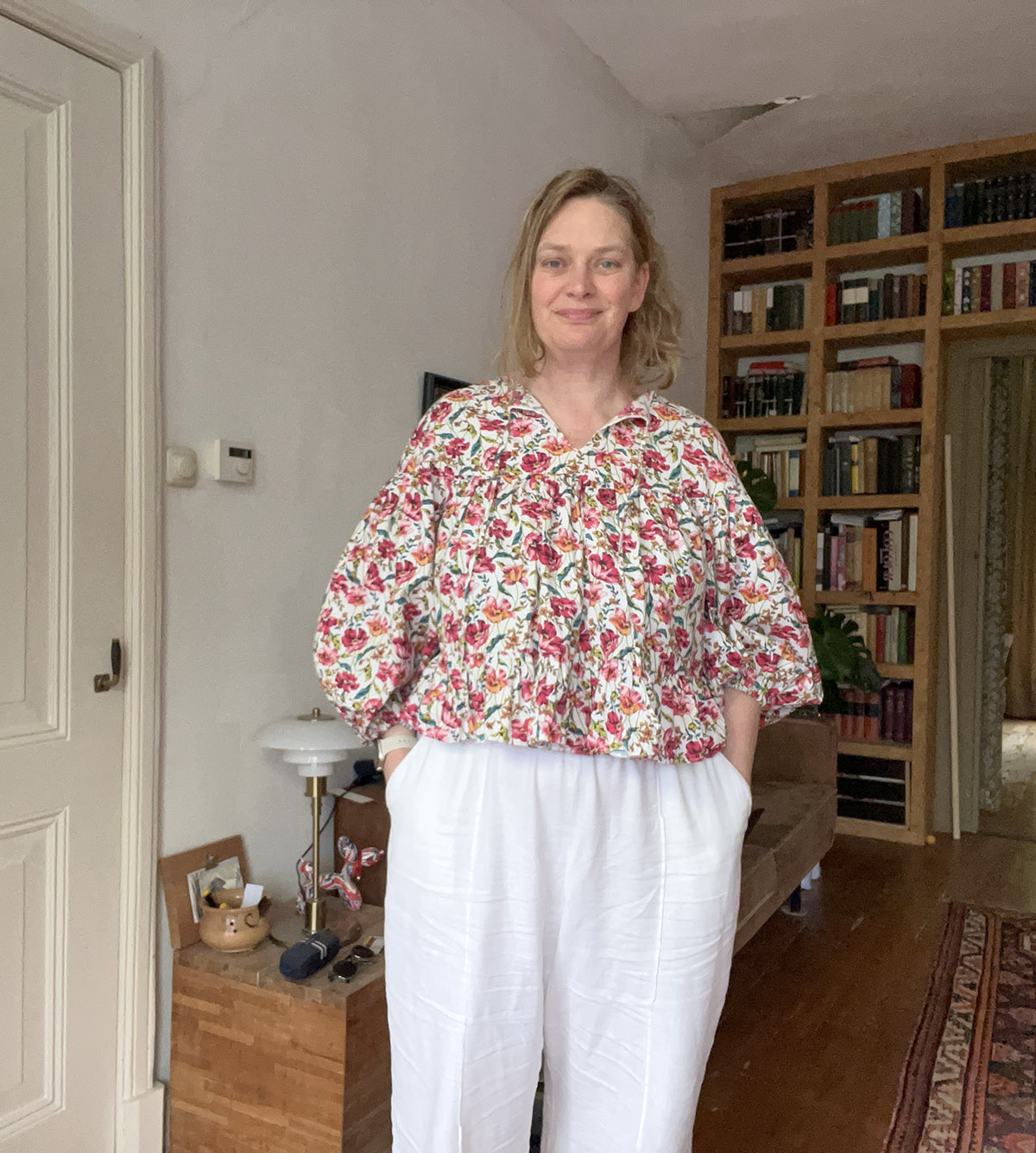
But I wore it once as a dress. Then I cut it shorter into a top… and wore it once more. And that top has been waiting on the rail in my workroom ever since to become something else entirely.
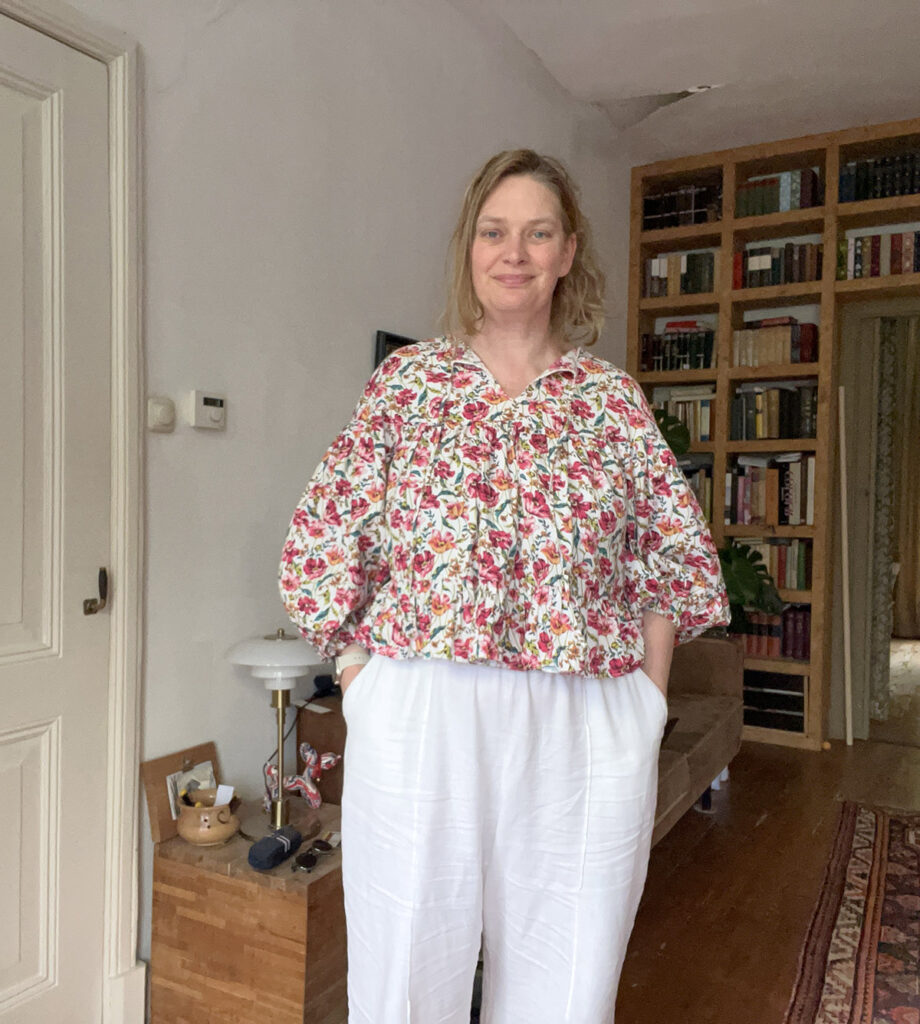
Not because the pattern was bad. Not because the design was bad. The problem was that I did not stop to ask the right question before I started. I made something I loved the look of without considering whether it suited my body or my lifestyle.
And that my friend – after more than 10 years of teaching people to sew and make their own clothes – is the one thing I see that trips people up the most. It is not a lack of skill on their part, and it’s not a lack of wanting. It’s that lack of a process from idea to reality.
The Gap That People Don’t Talk About
Sewing content mostly teaches you to follow. Follow this pattern, follow that cutting layout, follow the construction steps in the order that they’re written. And to be fair, up to a point that is all fine and dandy.
But it does not teach you to think for yourself, and it certainly doesn’t teach you to design.
‘But Eve’ I hear you say… ‘I don’t want to design’…
Fair play. Not everyone wants to end up with something unique to them. Sometimes they just want to be told what to do and how to do it and create a copy of what’s on a pattern envelope.
But for those who do want to be more creative there’s a gap between ‘I want to make something’ and ‘I’m going to cut into this gorgeous fabric with confidence’.
If a sewing course starts with a specific pattern, everything that is creative and fun has been done for them already. The only option you’re left with is ‘what fabric to pick’. Or it you’re really lucky – what view of that pattern do you want to make.
And while that is fun, it isn’t the best way to instil confidence in anyone new to sewing clothes when they’re left with a wardrobe containing garments that they don’t want to wear, a fabric stash that they lack the confidence to cut into and a feeling that that they’re missing out on the fun part of sewing their own clothes
What you’re missing is in fact the real process. A way to move from the idea in your head to a finished garment that is repeatable, well thought out and genuinely unique to you!
What The Process Really Looks Like
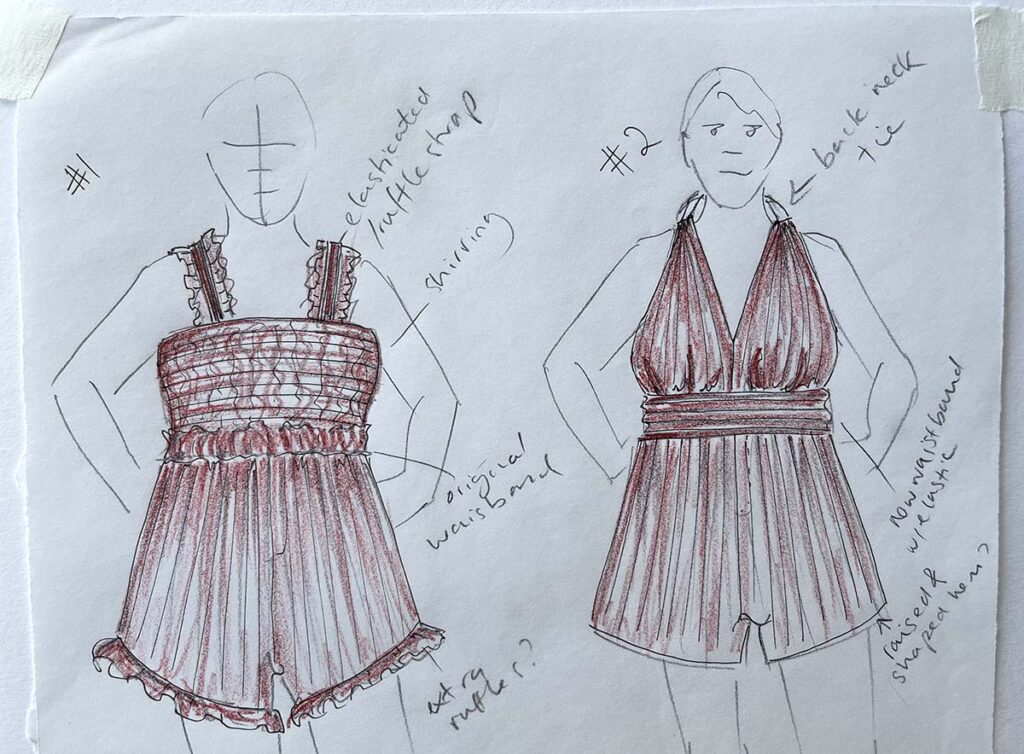
This is what I have built my new online course around – the process and guiding you through it. There is not one single project to follow, but a framework of sorts that you can use for every garment that you make from here.
It’s inspired by the way I created fashion collections when I had my own small brand and studio in London. And the process starts before you buy a pattern or fabric.
We start by digging into you and your wardrobe. What you’re missing, what your life is calling for and whether the thing you want to make is something that you’ll actually wear. Sounds obvious I know, but so many people skip this entirely.
Then comes the bit I get really excited about, that generic sewing courses do not teach you. Before you look at a single sewing pattern, you’ll build a design brief. A mood board with a specific number of images, a sketch that will be your reference point throughout and a written north star statement that captures exactly what you’re making and why.
By the time you open a pattern in week two you’re not just buying something and hoping it will match the vague idea in your head… you know exactly what you’re looking for and what it’s going to look like when sewn.
From there I’m going to guide you through measurements and pattern sizes in a way that eliminates any thought that RTW sizing has anything to do with your body. And then we’ll look at fabric. How the drape, weight and structure will change what a pattern does on your body. So, you buy the fabric based on the design outcome you want, and not because it looks pretty.
Before you cut into your chosen fabric, the most important step is a toile. No because you’re not good enough to get it right the first time, but because this is what every professional designer does before cutting into their fashion fabric.
This is the thing that will separate a finished garment that you want to wear because it fits vs one that doesn’t so you don’t.
And by the time you cut into your beautifully chosen fashion fabric? You know that it will work.
What Comes Out On The Other Side
Eight weeks from the day you start, you’ll have a finished garment. One that you design yourself, not just another version of someone else’s idea. It’ll be a garment that started as a feeling, became a sketch unique to you, got tested in toile fabric and ends up hanging in your wardrobe ready to be worn.
When you go to your wardrobe in a hurry to get to work? It’s there, waiting for you.
More than this though, you’ll have a process. A way to approach every project that comes after so you can be never feel stuck again.
Who Is Design & Make Your First Me Made Garment For?
It’s for you, if you’ve done some sewing before. It won’t work if you’re a complete sewing beginner, because I need you to have touched a sewing machine and not just stroked one! At the same time, if you’re an experienced sewer and you already have a process that works for you? Also, not for you.
This is for people in the middle. The ones who have made things but always felt like they were following someone else’s instructions and missing out on the fun part.
If that sounds like you, then this is the course that I built for you.
It’s called Design & Make Your First Me-Made Garment.
You’ll work through eight weeks of lessons, which will open up each week after you join. A mix of video lessons, worksheets and checklists at every point where a key decision is needed.
I’ve included a design croquis for those who think they can’t sketch, a measurement chart, a construction sequence to refer to when needed and a private community where I am actively present helping my peeps.
But the best bit? At the end of those eight weeks, you’ll have a finished garment that you designed and made. For your body. In a fabric that you chose with intention. And in a way that made sense for you.
If you’re ready to be truly unique and creative with your first me made project, join Design & Make Your First Me Made Garment right here!