Is Sewing Your Own Clothes Cheaper Than Buying Them?
Is sewing your own clothes cheaper than buying them? The answer is ‘it depends’, which is why we’re going to look at the costs involved in making your own clothing compared to buying – with some case studies too!
Key considerations to bear in mind when thinking about sewing clothes or buying them are the:
- Construction method / garment quality
- Fabric costs
- Garment lifespan
- Garment type
- Hardware & fastenings (buttons / zippers)
- Machine wear and tear
- Pattern cost
- Skill level / interest
- Sustainability & ethics factors
- Time investment
Let’s dig into each in turn to really understand the costs involved in sewing your own clothes vs buying them!

Construction Method / Garment Quality
The first consideration is the construction method used to create clothing. When you sew your own clothes, you are free to choose whichever construction method suits you, although you may have to tweak the pattern and the seam allowance to suit your personal preferences when it comes to seam finishes – as an example, a plain seam with overlocked raw edges will require less seam allowance than a flat felled seam, so there would be a need to add that extra seam allowance to an existing pattern.
When buying clothes, the construction method comes down to the garment quality which is usually based upon the ‘type’ of fashion:
- Fast Fashion
- Ready To Wear (Pret a porter)
- Luxury
- Haute Couture
Let’s have a look at what each of the above are!
Fast Fashion
This is the lowest cost fashion found on the high street and online. It’s fashion that is based on the latest trends, and manufactured very quickly – usually offshore in low-cost countries like China – to make a profit while the ’trend’ is hot.
Often, fabric used is cheap / low quality and often the pattern pieces are cut off grain. The seams are usually serged / overlocked for a faster construction method.
Here are 7 examples of fast fashion brands that you may be familiar with:
- Boohoo
- H&M
- GAP
- Primark
- Topshop
- Uniqlo
- Zara
Ready To Wear Fashion (Pret a porter)
Ready to wear – also known as prét-a-porter – is fashion that has a longer critical path from collection conception to creation. It isn’t churned out in a matter of weeks like fast fashion is.
Fabric quality is usually better, the construction method used is often more considered, but it doesn’t necessarily mean that it is created in more ethical ways.
I recall checking out a very expensive Alexander Wang sleeveless jersey top at Harvey Nichols in London several years ago, and being astonished to see that along with a steep price tag (£180!) the label inside the top showed it was made in China – it was constructed in a standard cotton jersey and the seams were raw and unfinished.
I could have made the same item with organic cotton jersey for less than £50!
7 examples of pret-a-porter brands are:
- Alexander Wang
- Alice + Oliver
- Chloé
- Diane von Furstenberg
- Erdem
- Rag & Bone
- Stella McCartney
Luxury Fashion
Fashion that is considered as luxury are usually brands with a higher price point than RTW and more ‘brand recognition’. They also are more likely to show at the biggest fashion shows each season (London, New York, Paris and Milan).
These brands are also likely to manufacture in more ethical and sustainable ways, keeping things in house as much as possible.
Here are 9 brands that create luxury clothes:
- Balenciaga
- Burberry
- Chanel
- Dior
- Gucci
- Hermès
- Lanvin
- Louis Vuitton
- Vivienne Westwood
Haute Couture
The ‘highest’ standard in fashion is haute couture, where garments are made to order and in limited quantities.
In order to qualify, haute couture members have to fulfil several criteria, one of which is to show a collection of fifty minimum designs every season, and each item sold must be completely hand made at the atelier – real ‘slow’ fashion!
Here are 7 fashion brands that are official members of the Chambre Syndicale de la Haute Couture:
- Chanel
- Dior
- Giambattista Valli
- Givenchy
- Jean-Paul Gaultier
- Maison Margiela
- Schiaparelli
Denim Jeans Case Study
To fully understand the difference in each ‘tier’ of fashion I thought we could have a look at several case studies throughout this article – lets start with a pair of jeans!
The Fast Fashion Jeans
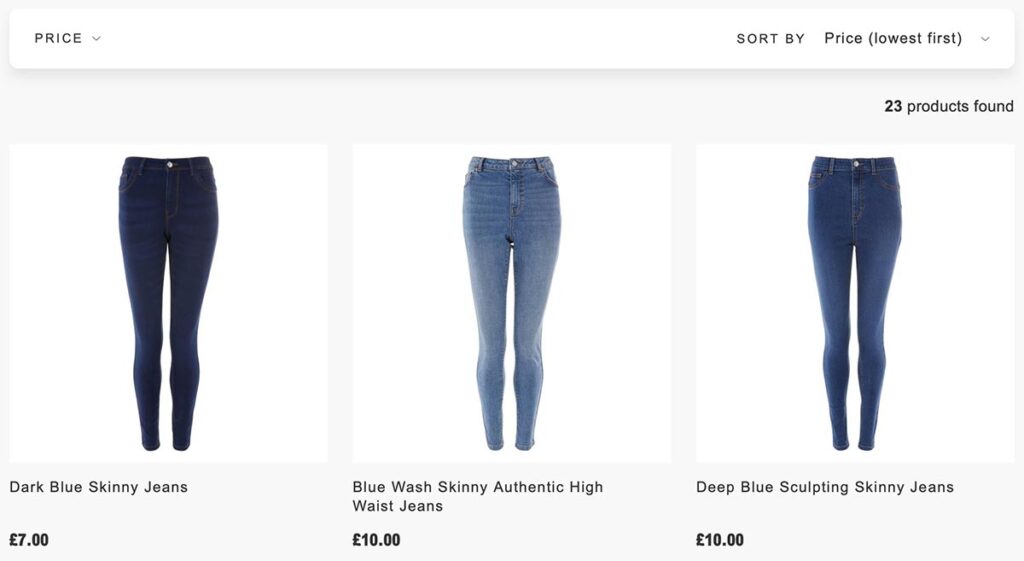
Primark in summer 2021 has a pair of dark blue skinny jeans for just £7 (on the far left in the above image). Unfortunately, there’s no other information on the website regarding fibre content but I would expect these to be around 97% cotton and 3% spandex based on how skintight they are in the photo.
The RTW Jeans
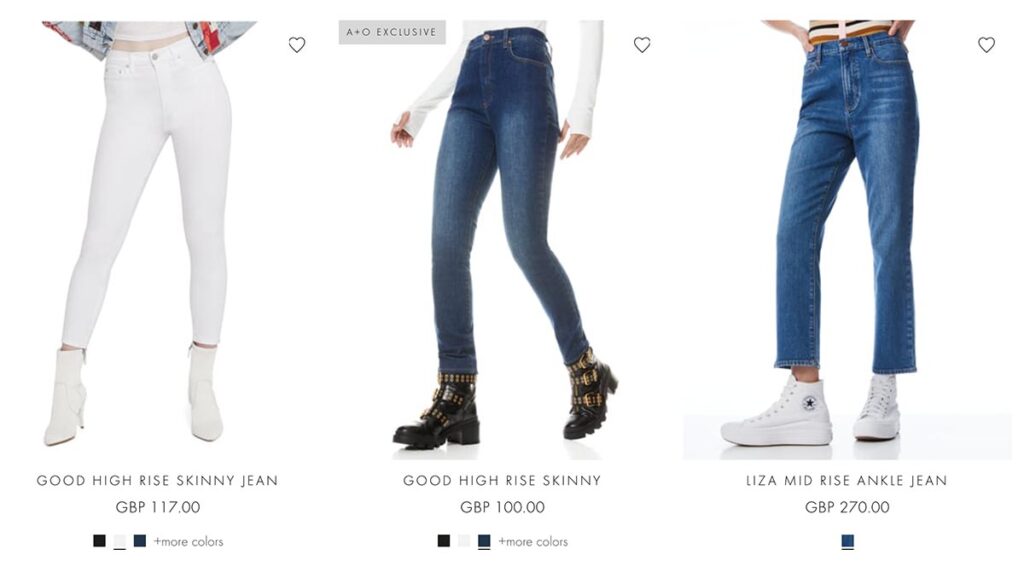
Alice + Olive also sell a high rise skinny jean, at a full price of £100, quite a price difference compared to the offering from Primark.
The fibre content is 30% cotton, 63% lyocell, 5% polyester and 2% elastane and the notes also state that they are imported – but not from where!
From the close up photos available of the jeans, the quality looks better than the pair offered by Primark, but without getting my hands on them, it’s impossible to tell.
The Luxury Jeans
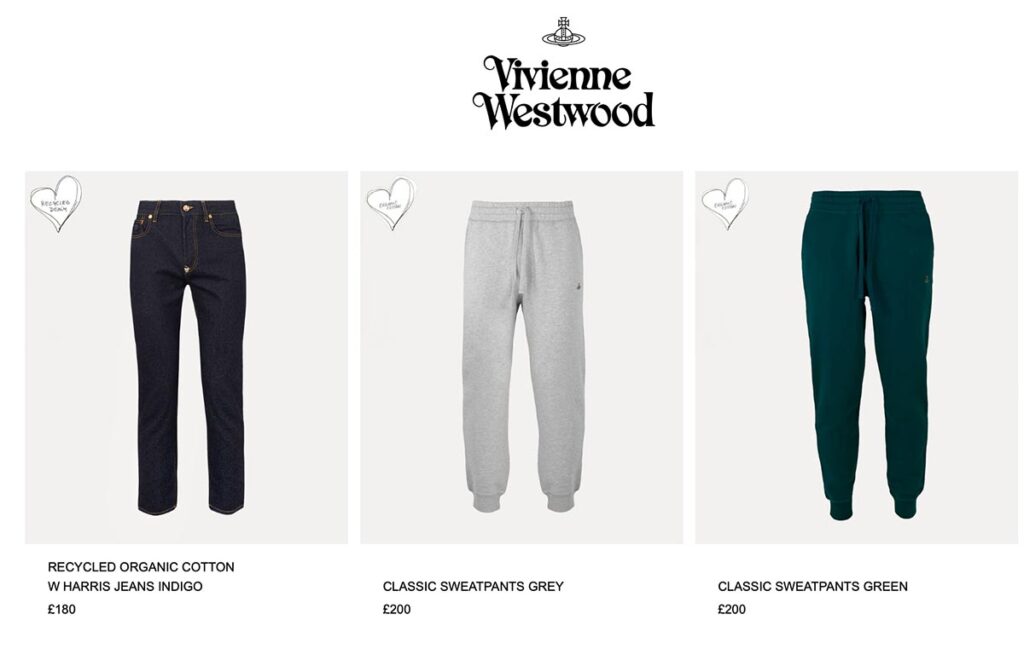
For the luxury brand selection, I went for Vivienne Westwood, purely because I noticed that the cheapest pair of jeans on offer are made from recycled organic cotton, although there is no info on where the jeans are manufactured.
Priced at £180 (so £80 more than the Alice + Olivia pair above ) the Vivienne Westwood jeans are made from 100% recycled organic cotton.
From the close up photos available on the website, they appear to be cut as on-grain as possible, so no twisted seams that would likely be seen in the £7 Primark pair.
The Couture Jeans
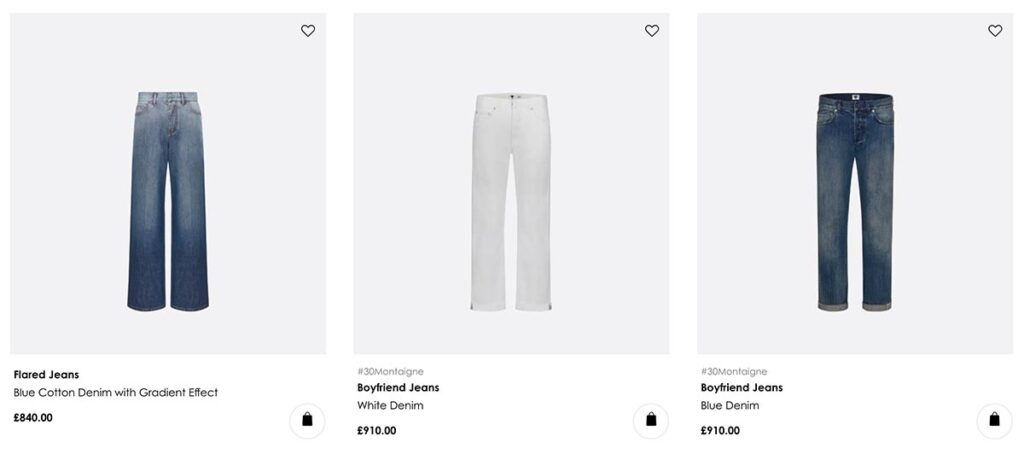
Now we get to the ‘couture’ jeans. For this I have chosen Dior, which is one of the 14 official members of the ‘Chambre Syndicale de la Haute Couture’, although the jeans themselves can not be considered couture when already made for distribution – but it will certainly provide an idea of the cost of any they design as part of a couture collection!
The price is significantly more than the luxury and RTW options, with these 100% cotton jeans coming in at an eye watering £840! This is £833 more than the Primark pair, £740 more than the Alice + Olivia pair and £660 more than the Vivienne Westwood pair!
They are noted as being made in Italy, so no Far East exploitation that is often seen in fast fashion and looking at the close up images, it’s quite clear that these are cut very much on grain. Win.
The DIY Jeans Option

If you were to make your own jeans, the costs involved include:
- Pattern (purchased or self drafted)
- Denim
- Interfacing
- Hardware
- Thread
- Machine wear and tear
- Time
Many of the above we’ll look at in more detail further on, but for now, let’s assess the cost of this pair of DIY jeans that I made in early 2021!
Pattern Choice
I used a self drafted pattern for these DIY jeans, but had I not, I would have gone for the Hudson Pant pattern from True Bias ($14) as they have the the overall silhouette of what I was aiming for, and would have been simple to modify. Cost: £0
Fabric Choice
For the DIY jeans I used about a meter of denim remnant from my stash – I think it was around £8 per meter back in 2009 – and the legs from old pairs of jeans that I repurposed. Cost: around £8.
Interfacing
I used interfacing from my stash, but it was from a pre-packaged pack I bought in 2020, from a small fabric store in Cambridgeshire UK, which cost me £4 in total. Cost: less than £1.
Hardware
Again, my stash came in handy, and I used a short zipper (bought on sale for about 50p a couple of years ago) and about 1m of 1″ / 2.5cm wide elastic. Cost: about £1.50.
Thread
I always used Gutermann and with all the zigzag topstitching, I used almost one 250m reel. Cost: £4.
Machine Wear & Tear
This is a tricky one to measure, so the easiest way for me is to take the cost of an annual service, divide it by the number of days in the year, and then multiple that by the number of days spent sewing them.
Cost of service (£100) ÷ days of year (365) x days spent sewing them (3) = 0.82.
I don’t actually sew 365 days of the year, it’s closer to half that, which would then be:
Cost: £100 ÷ 182 x 3 = £1.65
Time
My time is possibly the most costly part of the costing. When I work as a freelancer, I charge quite a high hourly rate, so to keep it sensible for this example, I’m going to take the UK government minimum hourly wage of £8.91 and it took me three days at approximately 7 hours per day to modify the pattern and then cut, sew and finish the jeans:
3 x 7 x £8.91 = Cost: £186.90
Total Cost Of DIY Jeans
The costs we’ve accounted for are:
- Pattern choice: £0
- Fabric: £8
- Interfacing: £1
- Hardwear: £1.50
- Thread: £4
- Machine wear and tear: £1.65
- Time: £186.90
Total Cost (Including Time): £203.05
Total Cost (NOT Including Time): £16.15
Obviously this is not completely accurate – if I were to charge a more accurate amount for the time it took me to pattern, cut and sew, the cost would be much closer to the Dior ‘couture’ example.
At the same time, I love sewing and find it relaxing, so although I would increase the hourly cost for commissions, when sewing for myself, I never factor in the time aspect as a cost.
How you feel about the time a sewing project takes will have an impact on whether you feel sewing clothes is cheaper than buying them…
Fabric Costs

The cost of fabric is another important consideration in this discussion. There are many different fabric types to choose from when sewing clothes, and within each type there are fibres to consider too – natural vs synthetic is just one choice you’ll need to decide upon, with fabrics made from natural fibres often costing more than those that are man-made.
The fabric you choose also has to suit the way the garment will be cared for, and the garment type too – you wouldn’t necessarily make a trench coat for summer showers out of silk organza would you?
Fabrics for colder and wetter seasons may end up costing more, as you’ll want to add on lining and possibly interlinings too!
The cost of fabric also plays a part in the costs of clothes by the different levels of fashion brands. Here’s a look at the fabric quality / fibre content and price for a shirt from the previous four brands we looked at:
Primark (Fast Fashion)

White striped shirt made from (presumed polyester) crepe, priced at £7.
Alice + Olive (RTW Fashion)
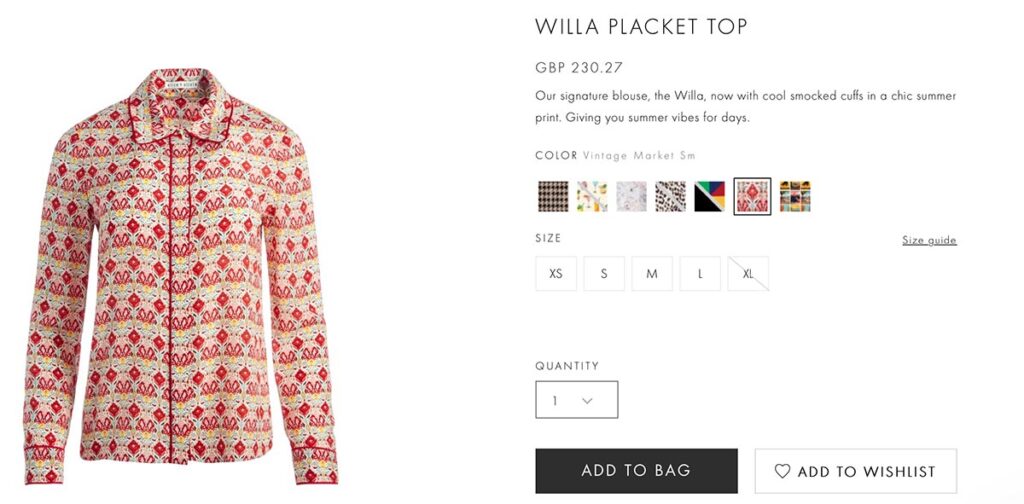
The printed button front shirt (the closest I could find to the Primark button shirt) is 100% silk and is priced at £230.
Vivienne Westwood (Luxury Fashion)
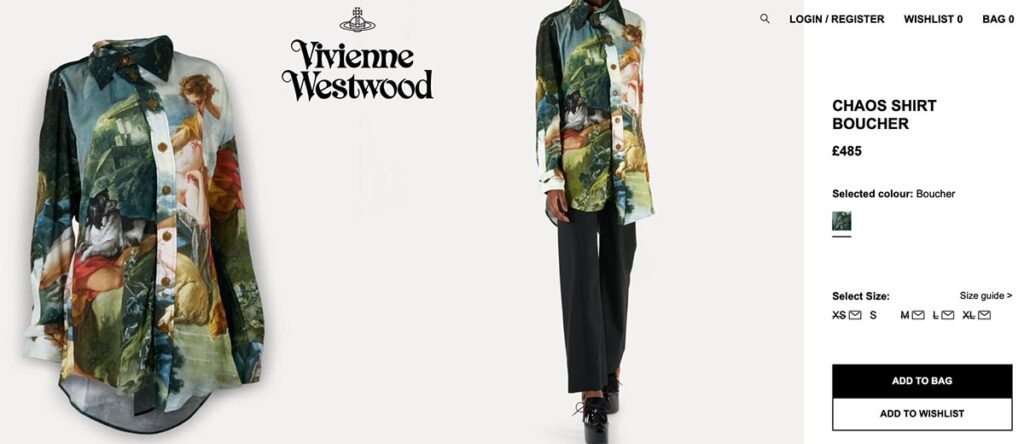
The Vivienne Westwood example is another printed shirt, priced at £485 and made from 100% responsibly sourced viscose.
Dior (Haute Couture Fashion)

The Dior shirt is another printed shirt, this time made from 100% cotton muslin, is again made in Italy and priced at £1700.
The difference in the four examples above are extreme! And one of the prime causes of the price difference will be the cost of the fibres.
Pre-printed and woven in China polyester for the Primark blouse will be significantly cheaper than the custom printed cotton muslin for the Dior shirt, which I would also expect to have been printed and woven in Italy too!
Garment Lifespan
Lifespan for garments really does vary, based on the quality of the fabric used and the construction method (discussed previously), but other considerations are the care instructions and how often it is likely to be worn.
Cleaning
Going back to the previous shirt examples:
- Primark’s polyester crepe shirt will be machine washable and hang dry
- Alice + Olivia silk shirt is dry clean only
- Vivienne Westwood viscose shirt should be dry cleaned, as viscose is prone to shrinkage when water is applied
- Dior cotton muslin shirt would be better off dry cleaned to protect the print, but could probably be hand washed in cool water too
The more carefully you care for the fabric making up the garment, the longer the garment will last – and this applies to any clothing whether sewn by you or purchased!
Cost Per Wear

Obviously the cost per wear is also a consideration. If an item of clothing – whether made or bought – is worn just one or two times, it will have a far higher cost per wear than something that is worn 20 or more times per year, for five years.
For this reason, you may prefer to buy frequently worn items that are better made and higher priced thinking that you’ll then take the time to make less frequently worn items, like outfits for special occasions for yourself.
Or the reverse may be true – perhaps you’re the person that will love making more everyday items like the shirts and jeans looked at here, but then splash out on a beautifully made outfit for those aforementioned special times!
Either way, the thing to remember is the cost per wear:
- How many times are you likely to wear that particular item?
- For how long will it ‘last’ – classic items tend to stay ‘in fashion’ and so are more wearable for longer than trend based items.
And then there is the time investment on top – but we’ll come to that further on!
For me, I may have spent around 21 hours making the DIY jeans in our earlier case study but they are the most worn item in my closet – I probably average wearing them 3 times a week, if not more!
As of writing, that means I have worn them 3 times a week, for 29 weeks (😳) which is a total of 87 times in 2021 alone! And I am wearing them whilst writing this!
A reminder of the ‘costs’ of making them and the cost per wear right now:
- Total Cost (NOT Including Time) was £16.15. Divide that by 87 and the cost per wear is currently £0.18
- Total Cost (Including Time) was £203.05. Divide that by 87 and the cost per wear is currently £2.33
For the giggles let’s compare that to the other brands to see what the comparable cost per wear might have been:
- Primark: £7 ÷ 87 = £0.08 – based upon one previous experience with Primark jeans, I very much doubt that the pair in question would have lasted 87 days of wearing…
- Alice + Olivia: £100 ÷ 87 = £1.15
- Vivienne Westwood: £180 ÷ 87 = £2.06
- Dior: £840 ÷ 87 = £9.65
I have to say, I do absolutely love my own DIY jeans. I love the fit, the design, the eclectic-ness of them… If these had been made by any of the above brands, I would have wanted them as much as I do now, and it’s because of how much I love them that I wear them so often – and this really is something to bear in mind!

If I didn’t love them as much as I do, I wouldn’t have worn them as much as I have, and therefore the cost per wear wouldn’t be as low as it is now. Had I bought the Primark jeans, just for convenience to save time on making my own, I would have maybe worn them a handful of times before caving and either buying a new pair or making a pair for myself.
We wear what we love and value, whether that is something made ourselves for less than £50 and worn daily or something costing £840 that we only wear on super special occasions.
And that is ok…
Garment Type
Further down I do look at the skill and interest level when sewing clothes – and garment type is part of that as some garments are more complex to sew, while others are very simple. If you have found fabrics that are suitable and in your fabric budget, then the joy of sewing a particular garment – and seeing the final result that YOU created! – is worth so much more than the price of something similar in a store.
Some beginner friendly items to start with are:
- Simple knit top / tee
- Basic jogger style pants (whether in knit of woven fabrics)
- Loose fit button down shirt
- Denim jeans (using a non-stretch denim!)
If you’ve seen one of the above in a store, but would like it in a different fabric type, why not have a go yourself? It will likely cost more to sew it than buy it, but the pride you’ll feel when completing it will be everything!
Hardware & Fastenings

Both decorative and functional hardware and fastenings should be considered too when sewing your own or buying clothing. The quality is important, and the better the quality, the higher the price.
Some common items that you should consider the cost of are:
- Zippers
- Buttons
- Studs
- Rivets
- Elastics
- Buckles
Always consider the lifespan of the garment you’re making – does it make sense to add in a plastic molded zipper on a jacket that you plan to wear for the next 15 years, knowing that this is one type of zipper that can be more easily damaged? Or would a metal chain zipper be more suitable?
Will wooden buttons be suitable as a button fly on your own denim jeans, knowing that they’ll take some strain and frequent washing?
It often pays to spend more on a higher quality fastening for those clothes that you’re sewing which have a longer intended lifetime!
Do check out my guide covering the different fasteners for clothes for other options.
Machine Wear And Tear

Sewing clothes takes its toll on any machines, but the most commonly used are your:
- Sewing machine
- Serger / overlocker
- Iron
Then there are the needles, threads, the number of machine services during the year to consider too – all incur a cost that is often not thought about, but these also add up to form part of the cost of sewing your own clothes.
To calculate the wear and tear costs on your machine, I recommend keeping a tally of how many days per year you sew, the cost of an annual service, and then use that as the ‘daily cost’…
Pattern Cost

When sewing your own clothes, you’ll need a sewing pattern. This can be one that you have received for free, purchased or drafted yourself.
Free patterns often have a more limited size range and less thorough construction instructions, while patterns you’ve self-drafted will take more time to draft and true before sewing.
It’s quite possible to buy a pair of jeans for the same price that you can get a jean sewing pattern – the Primark pair in code case study highlights this:
- Primark jeans = £7
- Ginger jeans pattern = $16
But, the pattern you buy can be used time and time again, whereas the jeans from Primark? They’ll likely no longer be wearable after a year of wearing.
The image further up is my fanny pack sewing pattern which I developed and made available back in 2018. I have made this several times in different fabrics and styles, and each one is not only unique, but also used! That is the value in buying a sewing pattern for a garment style that you love.
Skill Level & Interest
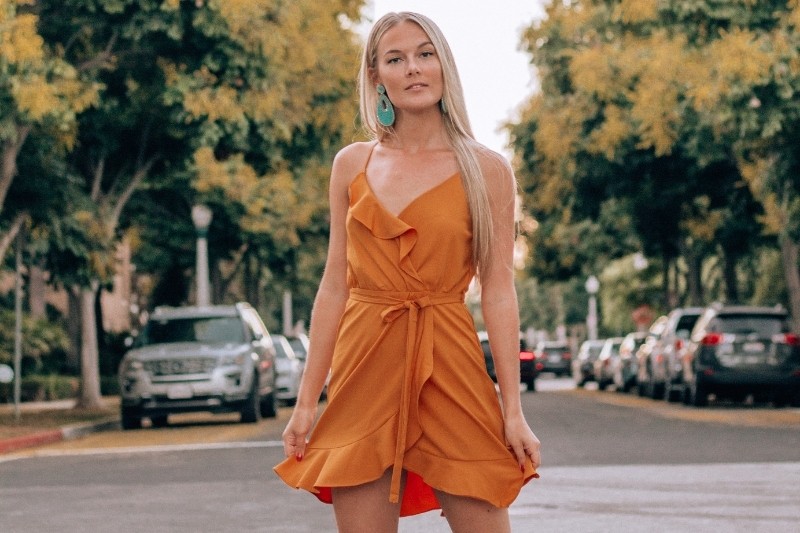
You should also consider your skill level when considering sewing clothes vs buying them.
If you are a sewing beginner and need a wedding dress, clearly it would probably be cheaper for you to buy one, rather than invest both the time and money in making your own. An advanced sewer may be able to sew a wedding dress in no time with very decently priced quality silk and lace. This could then make the dress cheaper to make than buy!
The same applies to a tailored jacket, but a pair of jeans or a buttoned shirt (as seen in our examples further up) is different. While both garment types are readily available to buy at relatively low prices, making them can be more costly in fabric, hardware and time, but be of great interest to someone who sews as a way of improving their sewing skills.
Sustainability & Ethics Factors
Sewing your own clothes is probably the most sustainable ways to wear clothing, although there are ethics involved in the manufacturing of fabrics and threads when sewing vs the ethics and sustainability of purchased clothing.
Some fashion brands have a very visible statement when it comes to their sustainability and ethics goals, while others go to great lengths to appear concerned, but are actually spending more time greenwashing than implementing.
Using fabric remnants and offcuts, buying fabric that is dead-stock or even using fabric originally used as bedding, curtains or used clothing (in good condition) is a great way to be more mindful and sustainable with your sewing.
You might also want to look at both fair-trade and organic fabrics and threads as well, which are available in both fabric stores and online. One of my favourite online places to order sustainable fabrics is Offset Warehouse!
That’s not to say that every fabric you buy has to be ethically produced. I mean, I personally would love that, but the costs involved in buying fair trade and organic fabrics is not always viable for many. But what would be amazing, is to think about the fabric you have your eye on and consider whether you REALLY love that fabric. Love it enough that you’ll sew with it in the next three months and wear the garment sewn with it again and again?
If it’s simply a beautiful piece of fabric that you love the look of, but know you’d never wear it as a garment, then better to carry on by, and spend the money on something that will bring you lots of joy.
Time
The final consideration when sewing your own clothes vs buying them is time.
We have a limited amount of time in our life, and while I am not advocating buying clothing because of that limit, I am saying that if time is not an issue, then nothing is better than taking the time to sew your own clothes.
Sewing clothes is a slow process when you have time to invest. Rush the job and mistakes will be made; you’ll feel unhappy with the result and you may end up never wearing that item of clothing.
Take your time, and not only will you learn new skills along the way, but at the end of every project, you’ll have a beautiful and unique piece of clothing to be proud of.
Can Sewing Clothes Be Cheaper than Buying Them?
As we’ve seen from the examples, sewing clothes can be cheaper than buying. But, it can also work out more expensive too! The key is in deciding how much time and / or money you want to invest in the sewing process.
For me, having a closet of unique hand made clothes, that nobody else has, is just one reason for my continued love of sewing. I also enjoy the process of remaking expensive clothes I’ve seen in stores and online, to create my unique take on a designers idea. And then there is the creativity of repurposing an item of clothing or furnishing fabric to make something unexpected that I’ll wear again and again.
For me, sewing clothes isn’t always cheaper than buying them, but it’s a lot more fun and a better way to spend my time.