
A Trench Coat Deep Dive (Before You Make One)
Love them or hate them, trench coats have been around for a looooong time. Which is partly why it appears consistently from some fashion designers season after season, year after year. Indeed I myself have designed and created more than one of this iconic outerwear garment!
But when was the trench coat created? What is it about the trench coat that makes it a classic coat? And why do we rehash this particular outerwear garment over and over?

Snapshot History of the Trench Coat
Despite its namesake, the trench coat wasn’t initially intended for use in World War I’s grimy and muddy trenches. It actually evolved from a rudimentary waterproof coat that was created by Scottish chemist Charles Macintosh and British inventor and founder of the British rubber industry, Thomas Hancock, back in the 1820s, which was just shy of 100 years before the First World War!
To understand what a trench coat is requires us to look back at its relatively rich and eventful history.
The First Trench Coat
Initially called a “mac”, the first version was intended to be a raincoat by its inventors, Macintosh and Hancock and the first trench coat was made from a rubberized cotton, which provided its wearers with great mobility.
The “mac” underwent several evolutions throughout the years after its debut with new technology bringing new ways to upgrade the trench coat. This made it more comfortable to wear and at the same time enhanced its water-repellent capability for wearing in rainy weather – perfect for the temperamental British weather.
Improving The Design
Three decades later in the 1850s, tailors including John Emary further enhanced the trench coat’s design and capabilities but it was only in 1853 when Thomas Burberry – a Hampshire draper – created gabardine fabric. This involved waterproofing individual strands rather than applying the coating on a finished textile – and the traditional trench coat as we now know it was created.
Using cotton gabardine as the fabric with its outstanding breathability and water-repelling capability saw gabardine-made trench coats becoming a popular choice for outdoor enthusiasts and aviators.
RELATED CONTENT:
The Trench Coat During WW1
Trench coats then became the coat of choice during the First World War. It was generally worn by officers who purchased the coat themselves. This was because the cost of high-quality trench coats meant that it was typically considered a piece of clothing that reflected one’s social status. That said, the military defined what a trench coat was during this period as the clothing became synonymous with ranked officers.
The WW1 version featured a double-breasted design which flared towards the hemline, which was always below-the-knee. It was also designed for functionality, as seen with the belt line having D-rings for hooking tools and other accessories.
The addition of a small cape on the upper back also improved its water-repelling capability, while storm flaps at the shoulder improved ventilation and comfort.
The Trench Coat As An Iconic Fashion Garment
After the end of the two World Wars, trench coats became more romanticized in classic Hollywood films. It went from being a piece of utilitarian-military clothing to something that was worn for a more fashionable look.
Not all clothing types can go from being synonymous with trenches full of mud and dirt, to something worn by slick gangsters, hard-boiled detectives, suave spies, and sultry femme fatales in movies – Humphrey Bogart and Audrey Hepburn are just two examples that spring to mind.
Classic Hollywood films like Casablanca, Breakfast at Tiffany’s, Kramer vs. Kramer, and The Matrix also helped to elevate the basic trench coat into a fashion icon that still holds today.
Suitable Fabrics For a Trench Coat

While the first version of the trench coat was a raincoat made from unique rubberized cotton which made it waterproof, it was severely lacking in breathability. This has meant that over the years since its inception, the humble trench coat has incorporated many and varied fabrics including:
- Cotton
- Denim
- Gabardine
- Leather
- Organza – yes, really!
- Satin
- Silk
- Wool
Trench coats made from different fabric types exude different aesthetics. Classic trench coats made from cotton or wool were a signature look for 1950s gangsters and detectives and still look incredible and classy to this day.
Then there are trench coats made from a more drapey fabric like silk which helps to give them a luxurious feel while a more structured material like leather can change the feeling of a trench to more goth or rock and roll.
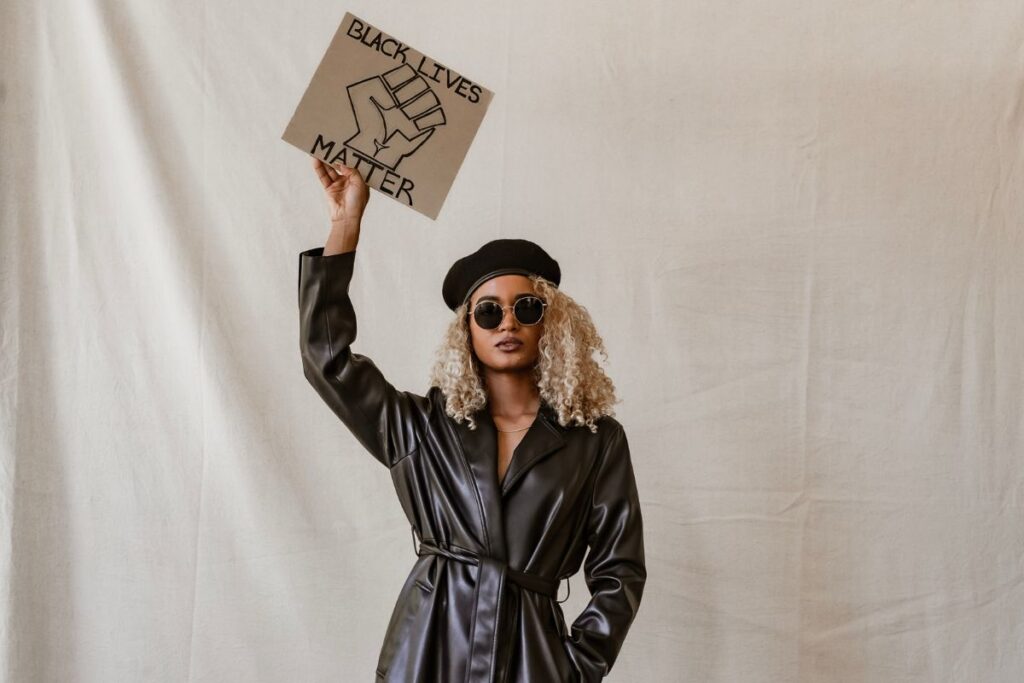
Nowadays, trench coats have evolved from being a functional attire to more fashion-oriented clothing with a dozen variations in style and material available for the choosing. If ever you want to dress to impress, a trench coat can offer that added something to your outfit.
An Anatomy Of A Trench Coat
What makes a trench coat unique amongst other outerwear garments is its different parts. Unlike other garment types, trench coats feature a number of unique elements that make up the overall design, each adding some functional aspect.
Let’s look at the anatomy of a basic trench coat below.
Collar
Let’s start from the top with the collar. Trench coats include a collar with small hooks on the front which are used to close the collar around the neck – a remnant from its WW1 days to provide the wearer with additional protection from the natural elements amongst other things.
Lapels

It goes without saying that one of the most recognisable design details is the wide lapels found on a trench coat! When I made my first version as a shell at fashion school I recall my tutor telling me to make the lapels bigger if I wanted people to know it was meant to be a trench!
Epaulet
The epaulet is a piece of fabric on the trench coat’s shoulders. These were initially used to indicate the military officer’s rank. Nowadays, it has been adopted into a sort of flourish to the trench coat’s style.
They usually have a small fabric band which the epaulet is fed through and then secured in place close to the shoulder with stitching or a press stud.
If you plan to make your own trench coat and will be including epaulets, consider how you can make yours a real design feature!
Sleeves

You’ll find that trench coats utilize one of two different types of sleeves: the raglan and set-in; each has its own merits.
The raglan style sleeve has a wider underarm area, providing added space for any clothing worn underneath.
The set-in sleeve has a seam at the shoulder that continues around the arms, and gives the trench coat a more formal appearance at the expense of mobility.
Double Breasted Buttoning

While modern versions often feature only one row of buttons – more so in fast fashion versions – nothing beats the classic double breasted trench coat with its two columns of buttons down the front.
The advantage of this more traditional button structure is that it provides better windproofing compared to a single column. However, the single breasted design will suffice if you don’t plan on sailing the high seas!
Lining
Trench coats come in lined and unlined versions, and which one is usually determined by the price but also the fabric type used to construct it.
A wool trench coat would be quite itchy if it were unlined, while one made from organza would look odd when lined as it would remove the sheerness of the outer fabric.
Lining also helps add protection from rain and cold weather. It is not common anymore for modern trench coats to feature a removable lining, but if you were making your own, you could definitely make it removable so that your me-made trench was wearable throughout the year!
Pockets

One aspect you’ll notice about the trench is their large pockets. While this may seem like an aesthetic choice today, these large pockets were essential in the early 1900s as their size could accommodate items such as binoculars, maps, and other necessary outdoor tools.
Each deep pocket usually has a flap too, which can be buttoned down for extra security.
Belt
A trench also comes with a belt that you can use to close it for protection during stormy or windy days – though it’s also used to cinch the trench jacket in and define a waist. But, of course, you can also opt to leave it open to show off the outfit you’re wearing underneath. The choice is entirely up to you.
D-Rings

Another feature that carried over from older trench coat designs to modern ones is the D-ring. These are attached to the hip of the trench coat, right beside the belt. These are incorporated for their functionality as they can be used to carry items that were commonly found with military officials and soldiers.
Recently, the belt is held in place with wide belt loops rather than D-rings but if you’re designing and making your own trench coat you could play with this detail too.
Yoke or Storm Flap
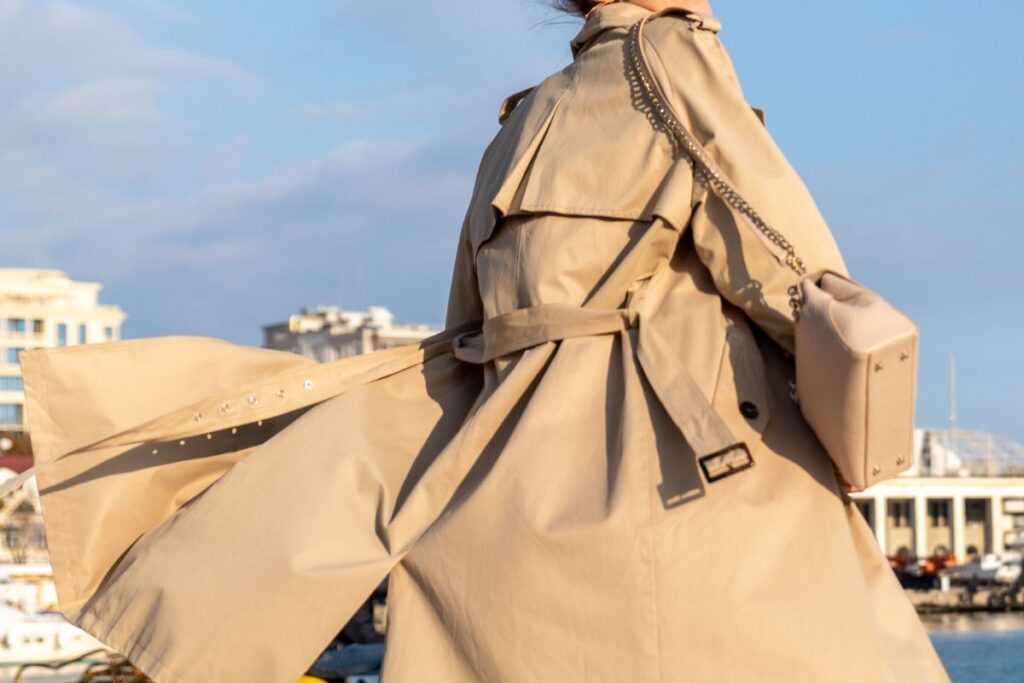
The yoke – also referred to as a storm flap – is not a standard fixture with modern trench coats, but it is still often used for its aesthetic value.
It is located at the upper back of the coat and looks like a small cape, but it is often continued from the front neckline too.
How To Make Your Own Trench Coat

As mentioned earlier in this article I have in fact made several and have a simple trench coat pattern that is easy to use. I haven’t yet digitized it, but if you are interested I could add it to my list of things to do this September so that you can make your own trench coat?
Alternatively you could buy an existing sewing pattern from other indie pattern designers, or perhaps – if you’re flush with the cash? – you could invest in your very own ready to wear version from one of the iconic brands like Burberry or Bottega Veneta? After all, the Burberry trench is probably the most famous of them all!
Whatever you decide, the iconic trench coat will become a wardrobe staple that you’ll return to consistently, year after year. I know I do, even if my old second-hand Burberry Trench is a man’s one and not ‘quite’ my size!
If you enjoyed this, you might want to dive into other clothing types – I’ve covered plenty in detailed blog posts and am happy to write more if you have suggestions? Let me know in the comments below if so!



Well done Eve. I hope you enjoy more happy gatherings with the group or perhaps one or two people you particularly gell with.
I purchased your draping class probably 2yrs ago now but due to a big move to another town I haven’t been able to get back to it. I hope I can find it! ? I will contact you soon for advice when I’m set up again. (I don’t really know where my dress form is atm!)
Thanks for all your interesting content.
Regards
Kaye
Hi Kaye! Thank you – I’m hoping to attend more so I can meet people I gell with… fingers crossed!
And yes, I recall you bought the drape & Contour class! It is still in the original location, but I will be ‘moving’ it over to my new platform before the year is out… which means I will need to re-record it, as the hard drive the original recordings were on is irreparable. But I have a list of those who enrolled on that course, so you will get an email with updated information, and I can always get you into the old version whenever you’re ready, just pop me a message. Have a fab day – I’m flat out on my back after stupidly trying to lift 29kg box on my own. Urgh! xxx