Should You Sew With Cotton Or Rayon?
Cotton fabric has been used for thousands of years and has always been a popular fiber for making clothing. It’s a great fabric for sewing beginners to get started with and it’s also a natural fiber which works well throughout the year as either woven or knitted fabric.
New on the scene is rayon – also referred to as viscose rayon or even modal – which was invented in the late 1800s and is fast becoming popular as an alternative to cotton.
But what are the differences between the two? Which should YOU be sewing with when designing and sewing your own clothes? Let’s explore cotton vs rayon in detail so that you can choose the right fabric for your next sewing project!

Cotton Fabric
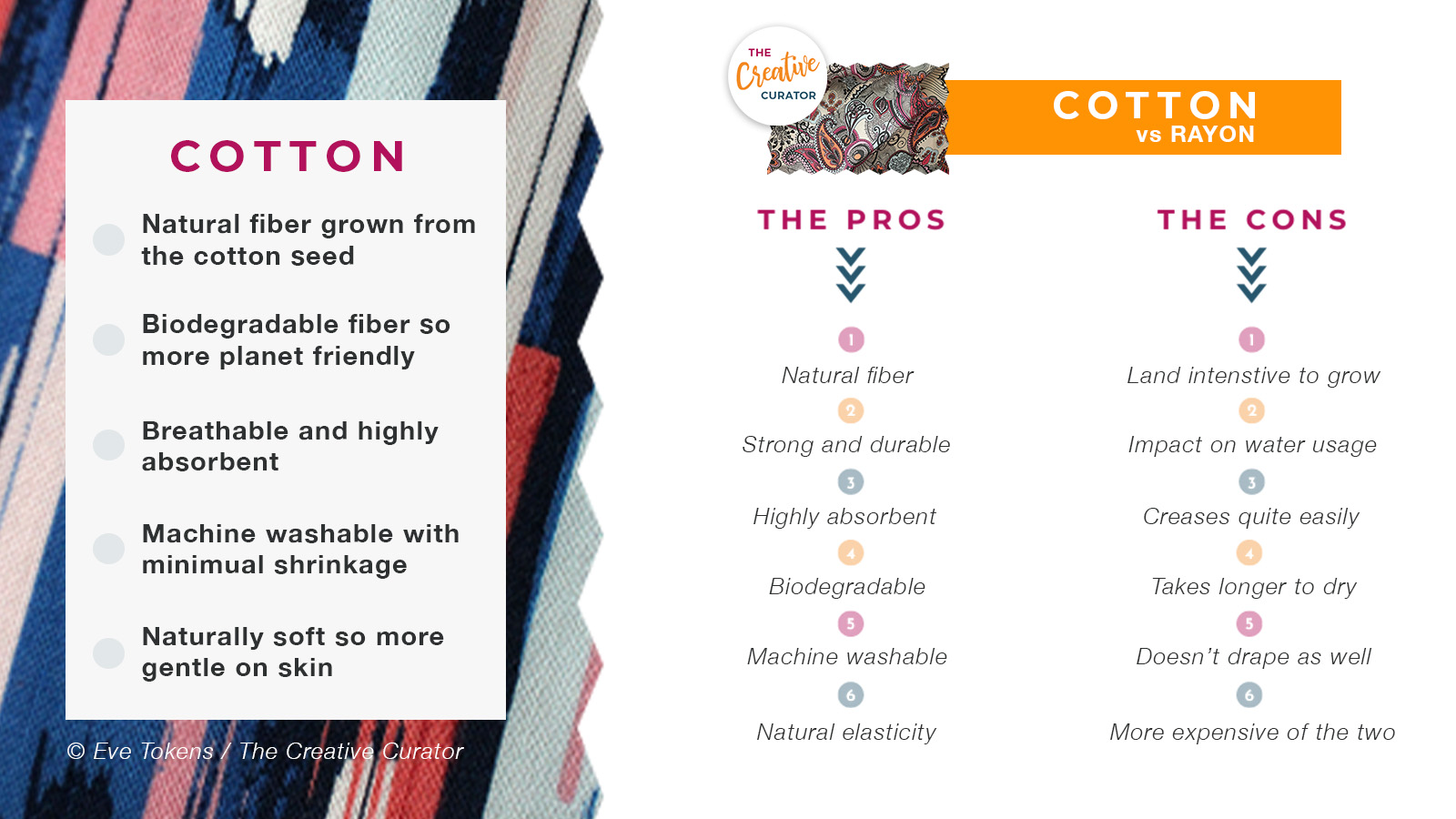
Cotton is one of the most commonly used textiles in the world and it’s easy to see why. First up it is an organically created fiber and does not incorporate any synthetic compounds in its structure.
Cotton fabric is derived from cotton plants, specifically the fibers that are harvested in its seeds – I have an existing article where you can learn more about how cotton fabric is made so I won’t go into great detail here.
To keep this section short, cotton fibers are sent to a textile mill where they are passed through carding machines to transform the fibers into cotton yarn. Once the cotton yarn is produced, it is woven – or knitted – into cloth.
Cotton is respected for many reasons including its affordability and durability. It is also easy-to-clean and comfortable, with both qualities making it an excellent choice for creating anything from clothes to home furnishings.
Below are the most notable properties that cotton brings to the table as a fabric and why it has become one of the top choices in the textile industry.
Absorbent
Due to the space that lies between the fibers, any fabric made with cotton fibers is highly absorbent and provides great moisture-wicking capabilities. There is a reason why towels are mostly made from 100% cotton: they can easily wipe away moisture from the skin.
Breathability
Cotton is a very breathable fabric and this is again down to the gaps between the cotton fibers. This makes cotton-based garments the perfect clothes for the hot summer days we’ve recently been experiencing compared to most synthetic fibers.
I love 100% cotton socks in the summer months as they make my feet less hot and sweaty than cotton blend socks.
Durability
Despite its soft nature, cotton fiber is also tough and hard wearing. The resulting pure cotton fabric is therefore quite strong and can withstand a significant amount of stretching, which then returns to normal once washed. 100% denim jeans are a great example.
As cotton becomes tougher when it gets wet, you don’t need to take extra precautionary steps when laundering 100% cotton fabrics. A spin cycle on your washing machine will cause no harm to your cotton clothes!
Finally, because of its strength, cotton is very resistant to wear and tear, which is why it is used so much for children’s clothing too.
Easy to Dye
Another popular quality of cotton is its ability to hold and absorb color dye. This is due to the absorbent nature of cotton – and it being a natural fiber – which means dyeing the fabric to get the right color for your needs is relatively easy.
Resistant to Static Shock Buildup
If static shock is something that you struggle with – I for one do! – then cotton will help to decrease the chances of getting a jolt. Cotton does not conduct electricity, so static shocks are not a problem when compared to garments that are made from synthetic fibers such as polyester. Something to consider perhaps?
Softness
One of the main properties of cotton is that it has a soft hand, whether woven or knitted. This aspect of cotton fabric is not surprising, considering that the plant it is derived from is equally soft and fluffy – did you see how fluffy the cotton bolls from the cotton plant are in the image above?
Even after being processed in a textile mill, cotton fabric retains its naturally soft characteristics – hence, its use in making comfortable garments.
In some instances fabric can be quite structured – denim and twill are great examples – but this is down to the weave structure rather than the cotton fiber itself.
Machine Washable
Along with all of the advantages of cotton fabric, such as its comfort and durability, cotton cloth is also as easy to clean as it is machine washable. In addition, its durability and ability to become more durable as it gets wet means that it can withstand machine wash relatively easily and won’t be easily damaged on spin cycles. Hurrah!
Rayon Fabric
And now we move onto rayon fabric which has some similarities with cotton fabric but is made from a non-natural fiber.
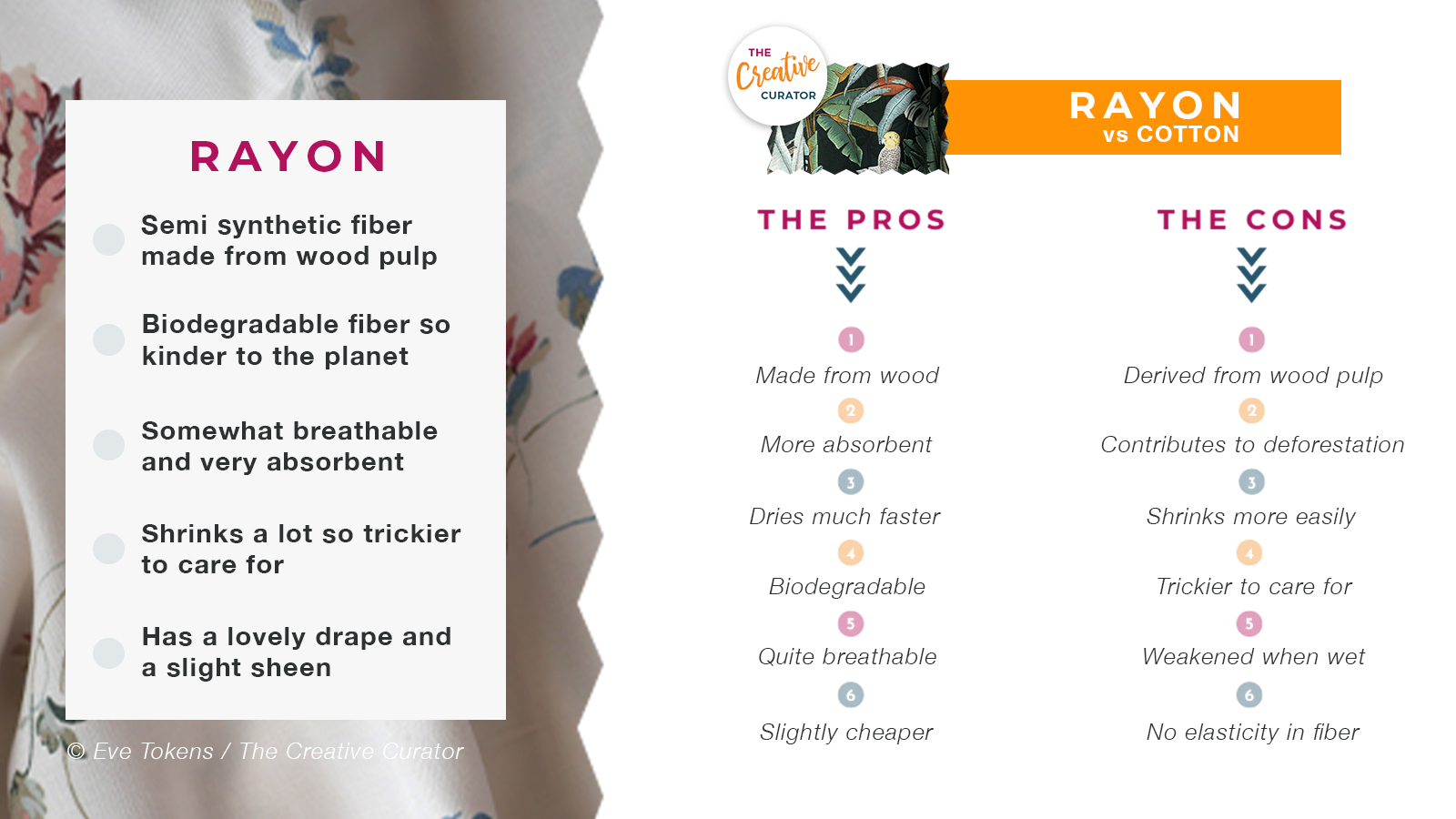
Rayon is a semi synthetic fiber. It is derived from naturally occurring cellulose fiber – the raw material is wood pulp – but is actually regenerated cellulose based on the manufacturing process. You can learn more about rayon with my in depth guide, so I won’t go into further detail here on how it is made.
To further highlight and draw a distinctive line between the two fabric types, let’s take a look at the unique properties that rayon fabric is known for.
Absorbent
Rayon is a highly absorbent fabric, even more so than cotton. This is down to rayon’s fiber base having similar properties to natural fabric such as cotton.
This high absorbency also makes rayon relatively easy to color with dyes. It’s why so many of the rayon fabrics I have in my stash are vibrant with colorful prints!
Breathable
Rayon also offers excellent breathability, similar to cotton. However, it does not retain heat, making rayon-based garments ideal for summer or for when you’re likely to get hot and sweaty working out.
Shiny
One of the most remarkable properties of rayon is its signature sheen which isn’t present in all fabrics that are made with cotton. There are also varying degrees of shine to rayon fabric as low sheen, and highly shiny variations are available.
I should also note that when washed in a machine (which I did by accident) the slight shine is removed and the fabric has a dullness to it. I discovered this when I recently machine washed my gathered rectangle skirt – the print is now not quite as vibrant as it originally was.
Softness
Rayon fabric is known for its softness and I’m sure that it’s the number one reason why people love sewing with it. The softness of rayon gives it a light and drapey feel against the skin, and this is in part because rayon fiber is quite flexible.
The Differences Between Cotton Vs Rayon

Rayon replicates the qualities of natural textiles such as cotton rather well. It is soft and has excellent breathability and it also stacks up well with cotton on how absorbent it is. However, rayon does not offer good insulation, and washing it with hot water can damage the fabric. There are several other differences between the two which we will look at below.
Cost
The cost between cotton and rayon varies as there are different fabrics to consider here. For example, cotton is used in many fabrics, from cotton poplin and cotton lawn all the way up to more high-end Egyptian cotton used in the home – and all are priced differently, with the latter being quite an expensive type of cotton fabric.
Where rayon is concerned, viscose types are generally cheaper than modal rayon – bear in mind that the difference between the viscose and modal are the base fiber that they start with, and modal is typically lighter and more breathable.
The upshot is that the cost of both will vary depending on the manufacturing process in creating cotton and rayon and the overall quality too.
Strength & Durability
Similar to cost, textile strength will vary depending on how the fabric is made. However, cotton is generally perceived as more robust than rayon fabric.
Rayon is still quite strong, though, and is able to withstand everyday use effortlessly. The deciding factor here will boil down to longevity.
One distinguishing factor that will undoubtedly separate the two is moisture. You see, cotton becomes stronger when it gets wet, and the same cannot be said for rayon. When it gets soaked, Rayon fabric has a tendency to shrink, stretch or warp and in worst-case scenarios, wet rayon fabric is even more susceptible to tears.
Cotton offers a higher level of strength and durability than rayon, whose ‘kryptonite’ seems to be water.
Breathability

Both cotton and rayon are breathable, often featuring a somewhat silky texture that looks and feels quite pleasing but it also has disadvantages. The main issue with rayon’s texture is that it has an awful moisture-wicking capability. The few items I have that are rayon make me feel a bit sticky and sweaty in the summer months. Compare it to cotton which has much better breathability and is also known for its fantastic moisture-wicking properties.
All things considered, cotton wins this round by a mile, especially if you’re thinking about making nice and cool clothing for summer.
Elasticity
Elasticity is another factor that falls in between the comfort and durability categories. Cotton fibers have a natural elasticity of 3 to 5% of their original length. On the other hand, rayon fibers do not have a natural stretch on their own.
Therefore, most rayon clothing will require a stretch fiber added in at the fabric manufacturing stage or it will require additional materials sewn into the fabric to give it a decent amount of stretch.
Usage
Which of the two fabrics offers better versatility in terms of application? Cotton and rayon are prominent fixtures when it comes to summer clothing as both are lightweight and breathable. However, cotton fabric has vastly more uses in other categories.
Cotton fabric is a staple not only in the clothing industry but also in other industries, such as cotton sheets, towels, and even in the medical field, as cotton is also used in creating bandages. Plus, almost every shirt in the world tends to be made from cotton over polyester (man-made) and viscose fabric (synthetic fiber).
That said, rayon is still a relatively new type of fabric, so it might be able to break into various industries in the future. For now, though, cotton is as versatile a piece of cloth as they come and is pretty much found almost everywhere.
Maintenance & Care
The two fabrics also have a significant difference regarding maintenance. Generally, cotton is easier to clean and take care of compared to rayon fabric. This is because most rayon clothing requires dry cleaning while cotton is machine washable.
Rayon does get a lead regarding longevity as ordinary cotton clothing will tend to stretch and wear out after a while, primarily if it features cheap cotton. If you want the best, go with high-quality cotton garments with a high thread count. These tend to last longer.
Environmental Impact Of Cotton And Rayon

Both sides offer solid arguments in the longstanding question of which of the two fibers is more sustainable. A common misconception is that cotton is the most sustainable as it is a naturally occurring fiber.
However, cotton production requires massive amounts of water, and specific manufacturing methods of cotton utilize several chemicals during the treatment process. This means it is not as sustainable an option as some people believe.
Rayon, on the other hand, is a synthetic fabric that is slightly more sustainable concerning its production, but the manufacturing of rayon has caused considerable deforestation, and the production process also includes the use of chemicals.
Weighing in on all of the above info, it’s quite clear that cotton and rayon bot have a significant impact on the environment, but I do believe that cotton has a slightly less harmful impact than rayon regarding the manufacturing process.
I know that while my go to are cotton fabrics, I have a few more rayon based garments I’ve made in the last year, than in years previous.
What are your thoughts on cotton vs rayon fabric? Do you have a preference or avoid one or the other? Let me know in the comments!
In the mean time, do have a look at the 5 best cotton fabric types for making your own shirt – perfect for those hot summer days! And if you’ve been wondering about polyester, I have a post on polyester vs cotton that you might find interesting too!