4 Pattern Cutting Books and What Each One Will Teach You (Or Not!)
There’s a lot of love and hate for pattern cutting books, depending on where you look and who you ask. Everyone has a favourite and I’m no different.
What few people tell you is that a pattern cutting book will teach you a method, but it won’t teach you how to use that method. These are two different skills, and the gap between them is often where many self-taught pattern cutters get stuck. Not because you bought the wrong book, but because a book – no matter how good it is – is unable to watch you draft and tell you where you went wrong in the process.
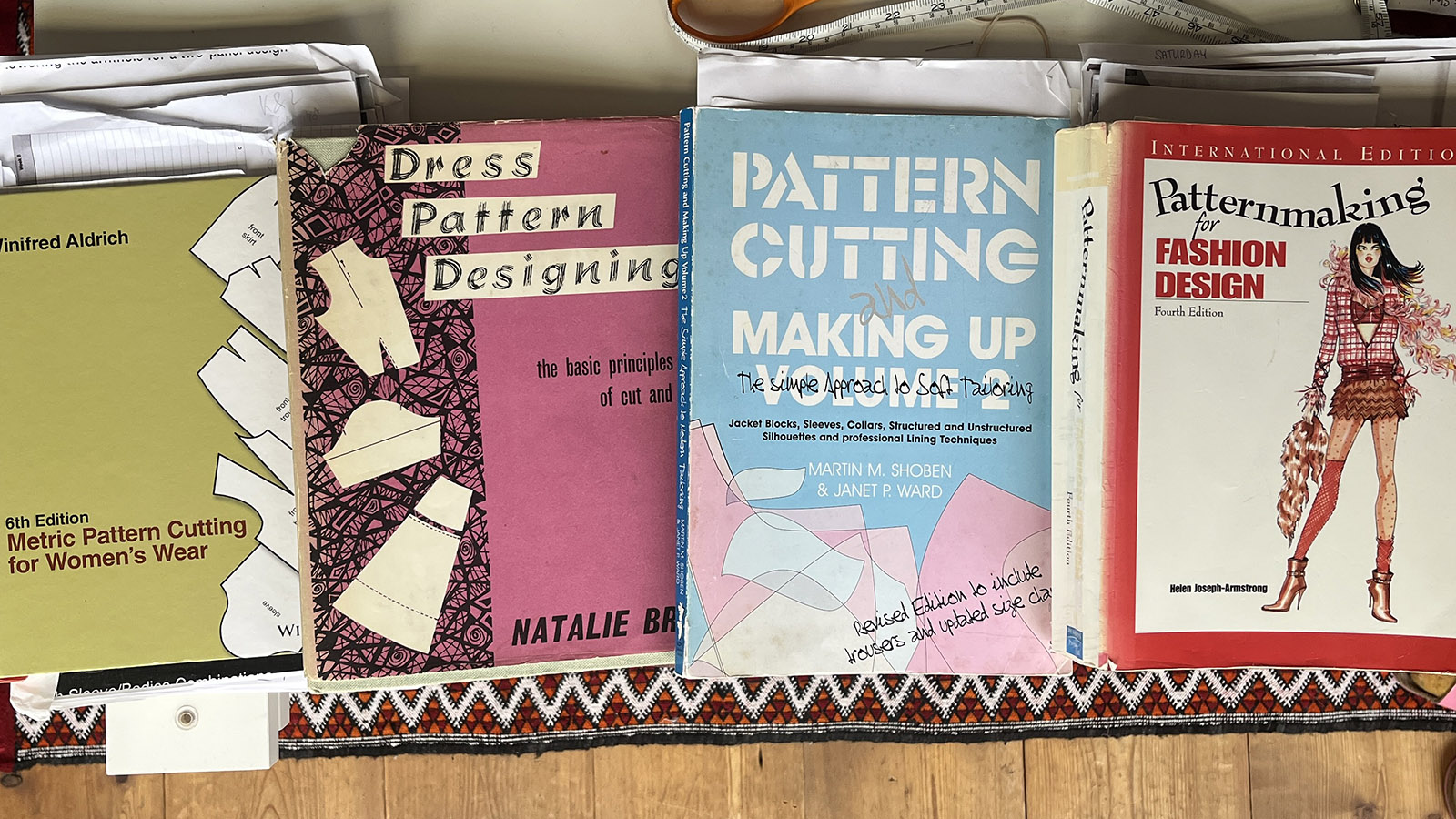
I’ve used all four of the books below professionally and I’ve taught from all of them too. So I’m going to share with you what each one is good for and where you may need a little something extra to fill the gap that they leave. If you want a wider list, you can see my best pattern cutting books post.
Some of the links in this article are affiliate links. This means that I may receive a fee at no extra cost to you if you purchase a recommended product.
At A Glance
In a hurry? Here’s my quick at a glance!
- Best all-round first book: Patternmaking for Fashion Design
- Best technical (and industry standard) reference: Metric Pattern Cutting for Womenswear
- Best for creative block manipulation: Dress Pattern Designing
- Best for soft tailoring: Pattern Cutting and Making Up
Four Pattern Cutting Books You Need to Know About
Let me take you through the four books that I am most familiar with.
Metric Pattern Cutting by Winifred Aldrich
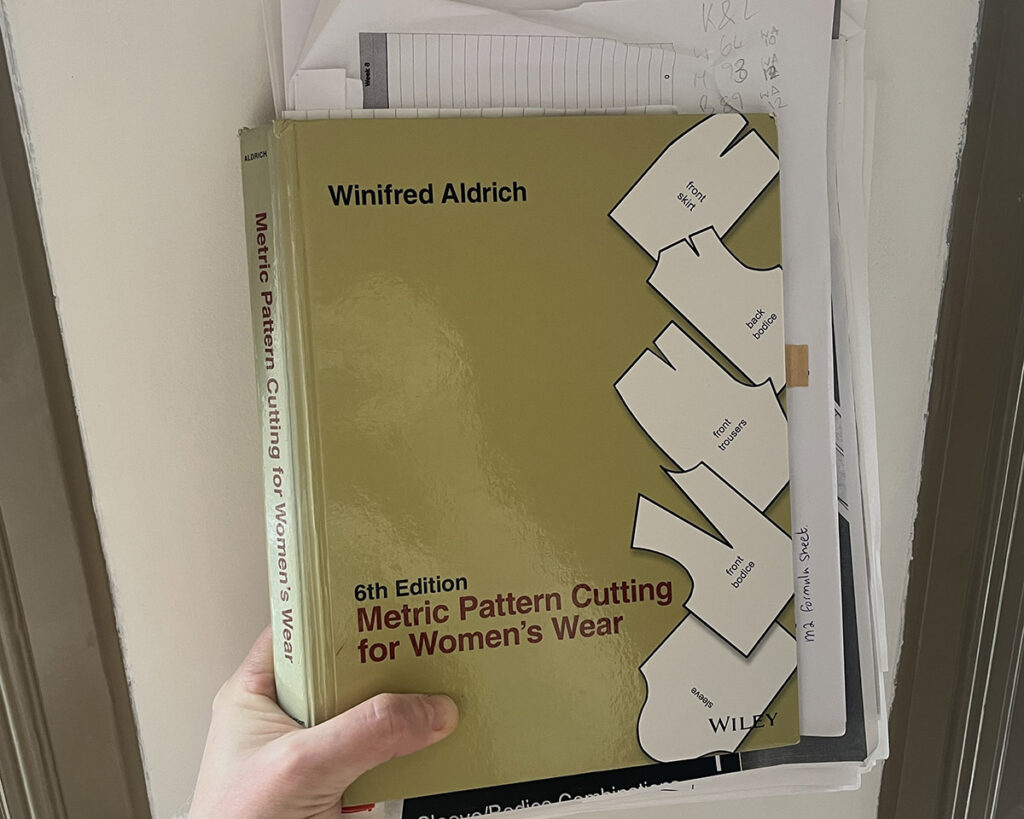
This book is best for building out your library or industry standard reference books. I first purchased this book when I took a short course at Central Saint Martin’s back in the early 2000s. It was on the “essential reading” list for that course, because the blocks taught in Aldrich’s books are the ones that most pattern courses in the UK are built around.
There’s also consistency in the measurement system that Aldrich uses, with every block that you’re taught to draft following the same logic. It’s very much a technical manual, and with that comes a dryness and the feeling that the content is dated, in terms of styles that are shared later on.
The main drawback with this pattern cutting book is the lack of text. It’s full of diagrams and steps but no information on what happens if you get anything wrong, and that is what a beginner needs.
If you do buy it, get the latest edition, which also includes some information on grading and more up to date sizing charts.
Patternmaking for Fashion Design by Helen Joseph Armstrong
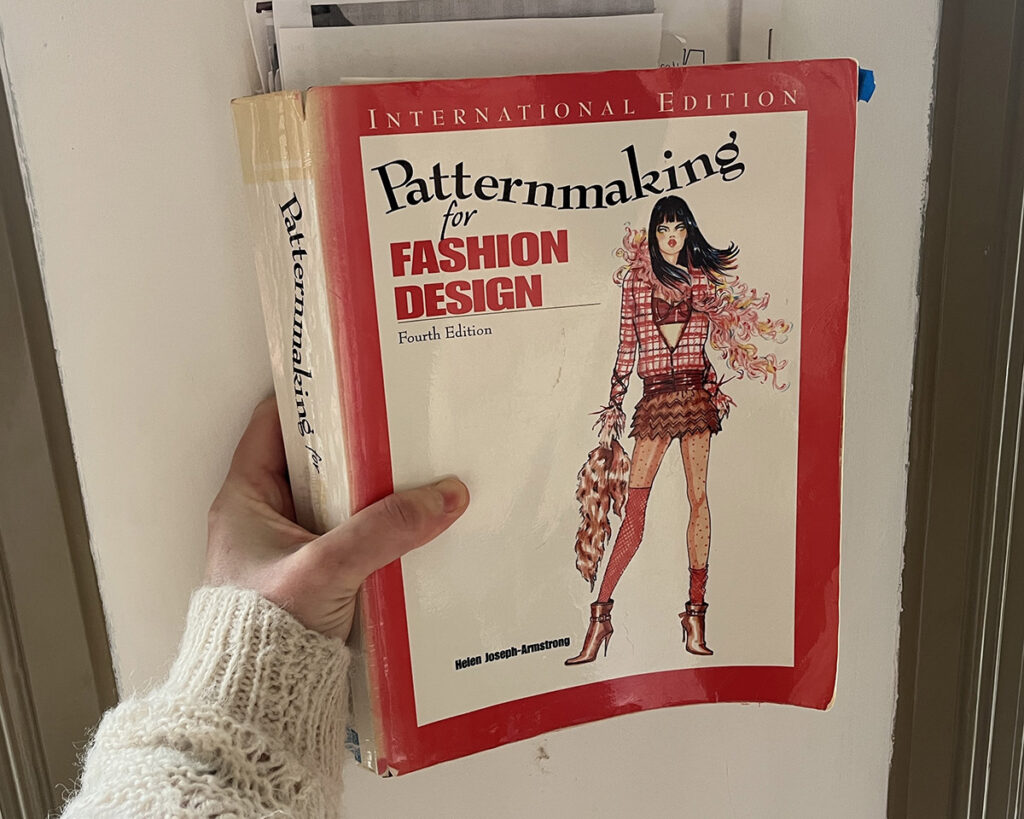
I often refer to this one as my “bible” as it’s the best one for teaching from which is why my copy is quite old and falling apart. This book is best for those who feel like that want something that is beginner friendly and not a manual. It is full of styles with steps for you to follow but also has additional styles for you to analyse and work though yourself, a great way to practice your skills.
It also works well for those who haven’t been to design school and learnt pattern making professionally, as Amstrong is wordier than Aldrich and takes the time to explain a little more.
The main drawback for this mammoth pattern cutting book is its size and scope. It covers so much that it can feel easy to get lost in this book without a clear sense of what to draft first, second or third.
It’s also an American textbook, so it works with inches and refers to blocks as ‘slopers’, which can take a bit of getting used to if you started out using metric. Again, make sure to buy the latest edition.
Dress Pattern Designing by Natalie Bray
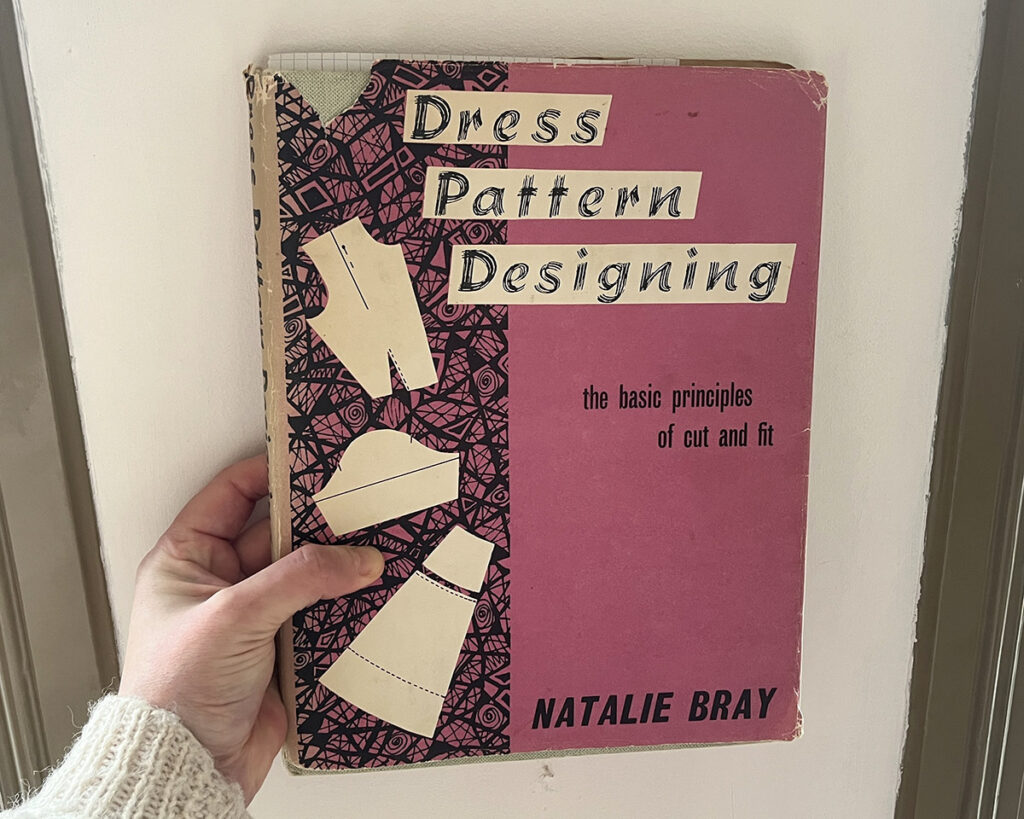
This is one of the oldest books on my shelf but has still earned its place there. There is not as much about the technical side of pattern cutting as in Aldrich’s book; instead, it focuses more on the design process of manipulating blocks to create shape – and this is similar to how I learned at fashion school, where the aim was to get us to think and create as we would in a design studio.
The book’s drawback is twofold. First is that it does not come across as beginner friendly, but more of a you have the fundamentals and now you can get creative with them. There’s a lot of assumed knowledge.
The second thing to note is the language. The book is old, and although later editions were edited by Ann Haggar, the language used within can still feel old fashioned, especially so for non-native English speakers.
Pattern Cutting and Making Up by Martin Shoben
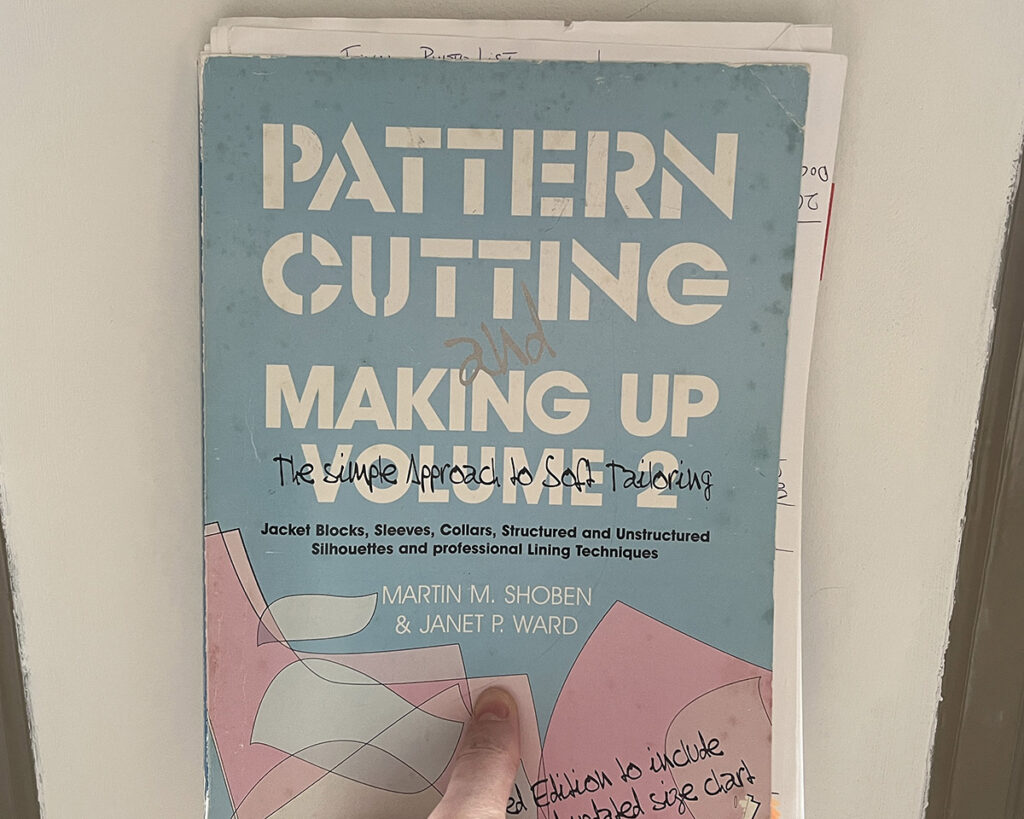
I got an earlier copy of this book years ago for a BTEC in pattern cutting, because I wanted to better understand more tailored and structured garments. This book is great for that if you want to avoid the technical style of Aldrich, who also has an outerwear pattern cutting book too.
The book also covers fit and shaping for outerwear – coats and jackets – which is in of itself more technical than simpler garments.
The drawback of this book is that it is a more specialised textbook, and therefore too much if you’re looking for your first pattern cutting book. Save this one for when you have the fundamentals down.
Which Pattern Cutting Book Should You Buy?
If you want only one book on pattern cutting, then the one to start with is Pattern Making for Fashion Design by Helen Joseph Armstrong. It’s an easier read and full of information that will help you develop your pattern cutting skills. If you prefer a more technical book – that is metric and not imperial – then Aldrich would be the best choice. It is an industry standard reference book so if you plan to study fashion design it will help you plenty.
What You Won’t Learn from These Pattern Cutting Books
All four of the books above are a great reference book to have on your shelf if you’re excited – or even just curious! – about learning pattern cutting. But a book can’t:
- Look at your toile and tell you why the armhole is pulling in a certain way.
- Sequence your learning so that you’re not trying to draft a fitted bodice before you’ve understood dart manipulation.
- Show you the process of pattern drafting, including how to use a pattern master, how much ease to add or what trueing your seams actually looks like.
- Answer the “what do I do now?” question that will inevitably come up when you’re halfway through a toile.
It’s this gap between owning the information (in book form) and being able to use it that stymies many who want to learn about pattern drafting.
Where To Get Extra Pattern Cutting Guidance
If you are at the very beginning of your pattern cutting journey then you should start with my free pattern making course, The Starting Block. It covers the beginner-friendly foundations in an easy to learn way.
When you’re ready to go further, my online course A Pattern of Your Own takes you through drafting your own blocks, step by step. We cover bodice and sleeve blocks, skirts and trousers, using your own body measurements.
The process videos can be paused and rewatched as often as you need so that you can draft along with me in the same order.
Then get feedback from me in the community instead of trying to work out your next step from a diagram that is drafted for the “perfect” industry sized model, and not someone like you and me with our fabulous lumps and bumps.
If you prefer learning via video and personal guidance then this is the perfect way for me to help you, but it is also possible to read pattern cutting books and learn from them.
I have an extensive collection of pattern cutting books and notebooks from my student and industry days, so you’ll get no judgement there from me!