Frida Kahlo Exhibition
It’s been a long time coming, but I recently spent time at an exhibition, something I haven’t done in several years due to the worldwide pandemic. The exhibition was ‘Viva La Frida’.
Featuring many of the garments worn by Frida Kahlo as well as some of her most famous paintings, the Frida Kahlo exhibition in Assen, Netherlands was wonderful, and a great treat from David for my birthday.
Today, I’m sharing with you my experience of Viva la Frida and I hope you enjoy it!.
Let’s dive in!
We picked a good day weather-wise and after a quick walk to the train station we grabbed a coffee to enjoy enroute and boarded the train. It was my first train journey since November when I had returned from the UK, so a relatively new experience for me.
The train journey was of course nothing special – what I wouldn’t give for a more scenic mountain view! – but in no time at all we were in Assen, and walking to the Drenthe museum.
Inside we had to queue despite having tickets. With just one person at the check-in desk, and the need for covid vaccination passes along with our tickets, it took a while to be admitted.
Let’s Meet Frida
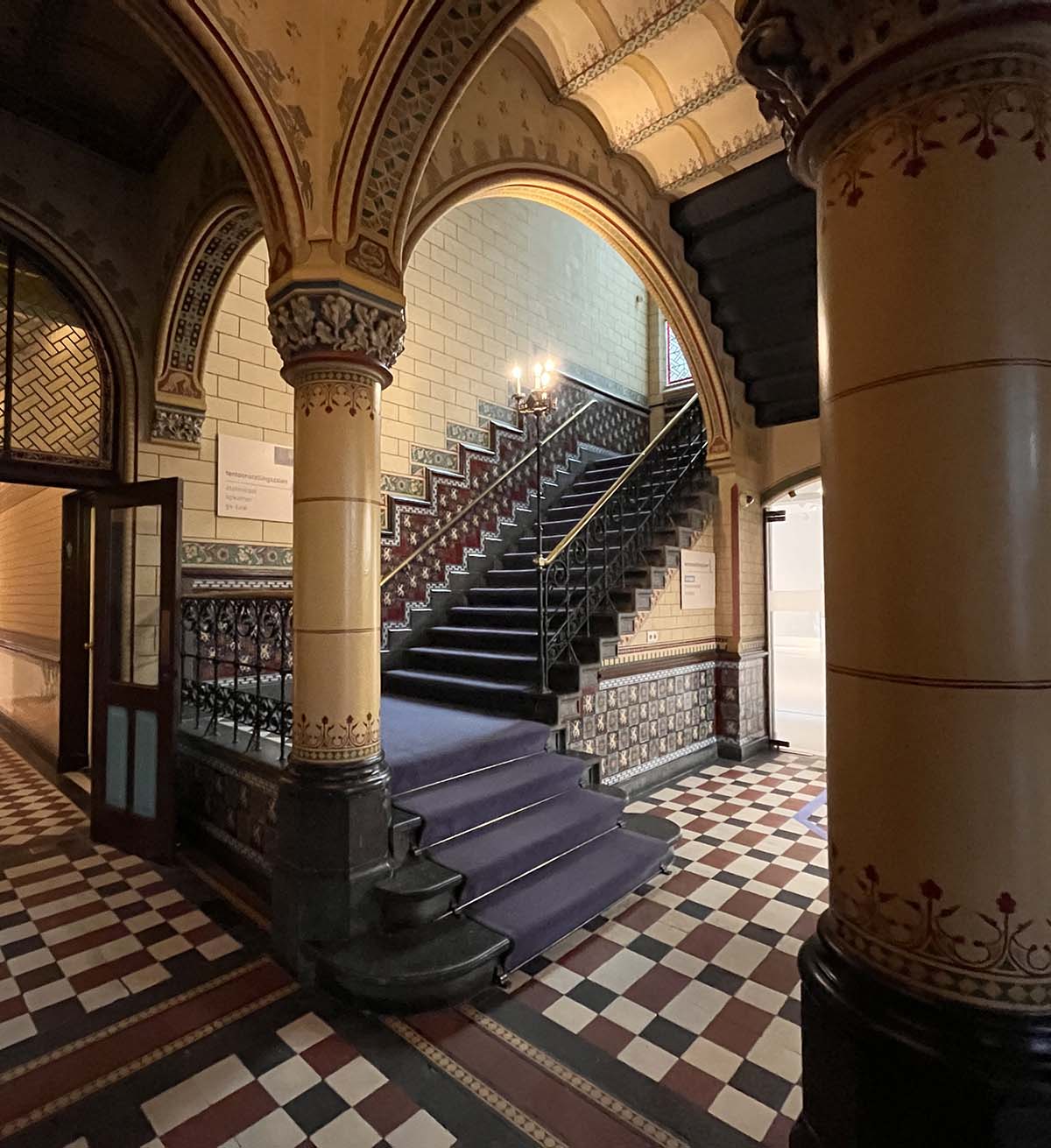
Once in, we headed straight to the Meet Frida section, which saw us pass through a beautiful part of the museum.
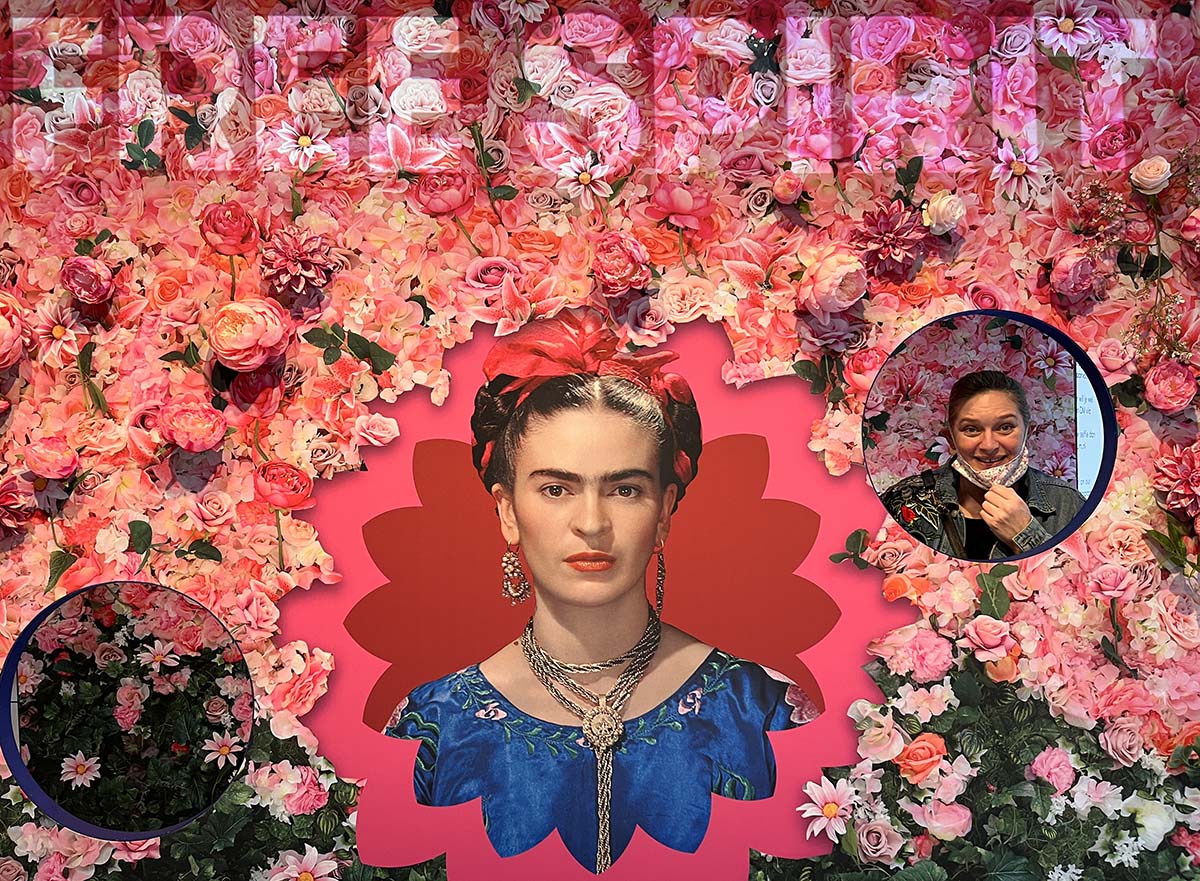
Of course David made me stop to take some selfie’s with Frida.
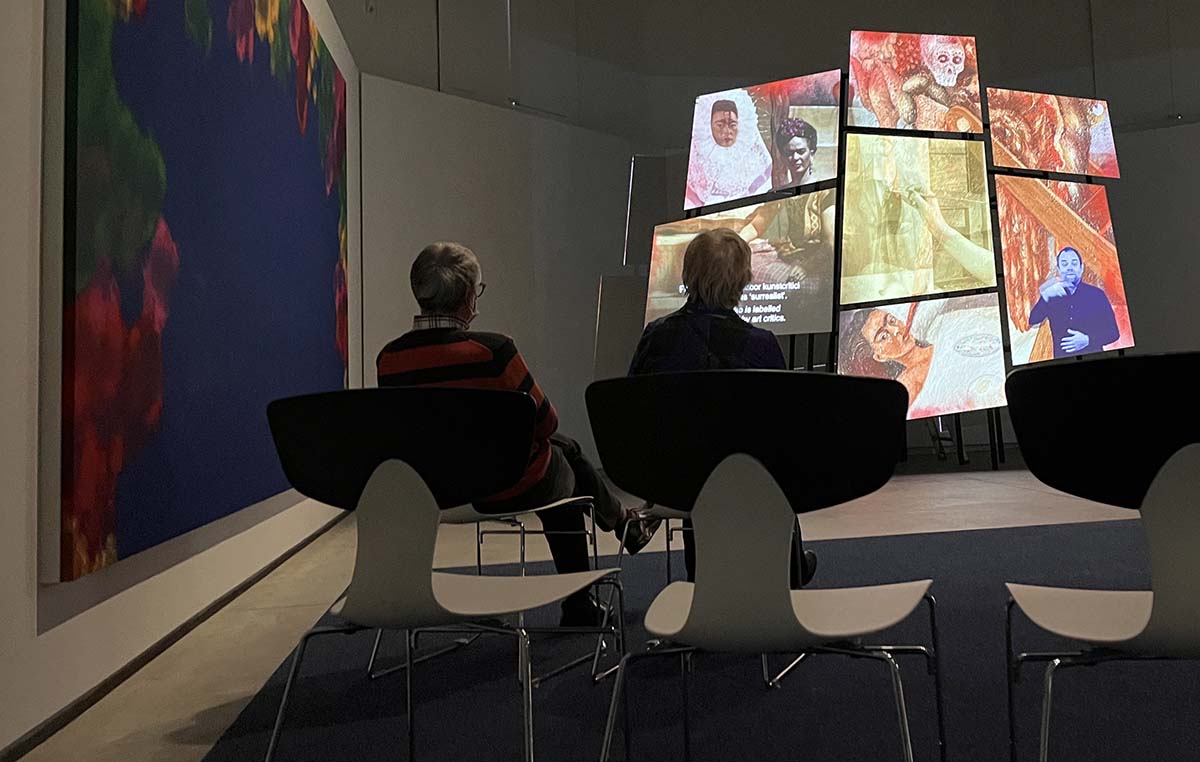
The ‘Meet Frida’ video was 9 minutes long and gave a wonderful albeit succinct history of Frida’s life.
We then walked back on ourselves to enter the main exhibition area for Viva La Frida!
Frida Kahlo’s Life
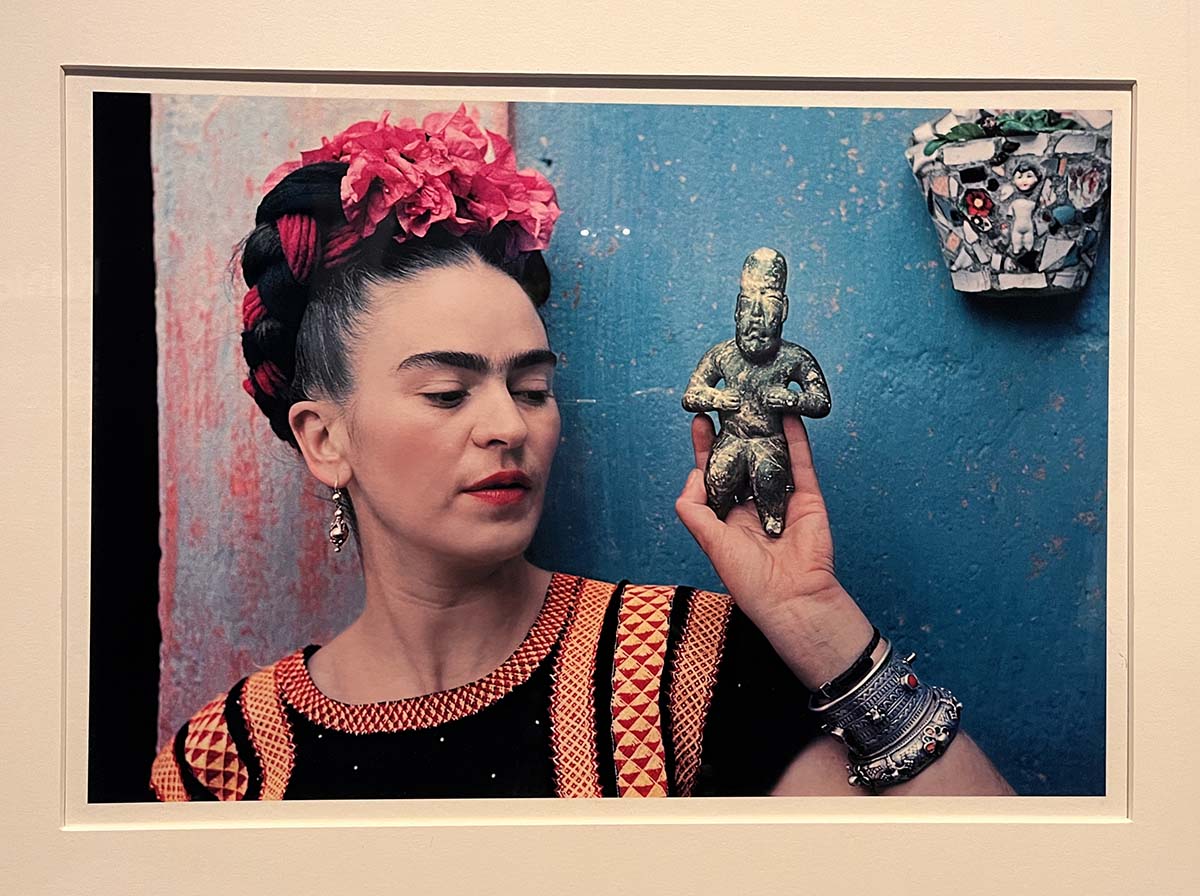
I have not shown visuals in the order presented, but more as how I interpreted my time spent within – it felt more natural that way.
I have also not included all that I saw as that would be unethical, so I have included just a fraction of the what I saw on my visit for your education purposes.
Frida Kahlo was born in 1907 in Mexico. She was a Mexican painter, who suffered a life of pain which she portrayed within her art in what has often been said to be surrealist, but in my opinion is closer to realism when you consider the life that she lived.
At just four years of age, Frida caught polio and her younger years were spent living with the disabilities this caused.
At the age of 18, she was involved in an accident. The bus that she and her then boyfriend were on was crashed into by a tram which saw her impaled with an iron handrail. It went through her pelvis and vagina, fractured her pelvic bone, punctured her uterus and abdomen and broke her spine in 3 places and her right leg in 11. She also suffered a broken collarbone and a crushed foot.
As well as ending her dream of becoming a doctor, the accident also left Frida with significant pain that she would endure for the remaining years of her life.
Whilst recovering in hospital and again at home, Frida rediscovered her childhood love of art, and would paint from her bed.
Her main influences were Mexican folk culture – Frida was very proud of her Mexican heritage – and it wasn’t long before she captured the attention of Diego Rivera, a man 20 years her senior.
They had a very passionate relationship, which saw them marry in 1929, divorce in 1939 and then remarry just one year later.
After their first marriage, Frida started to wear clothing worn by indigenous Mexican ‘peasants’ and there were many examples throughout the exhibition.
But let’s start with her paintings.
Frida Kahlo’s Paintings
I was completed fascinated by how Frida depicted herself within the many self portraits that she painted.
Here we see Frida with her painting ‘The Two Frida’s’ which depicts two versions of Frida sat side by side.
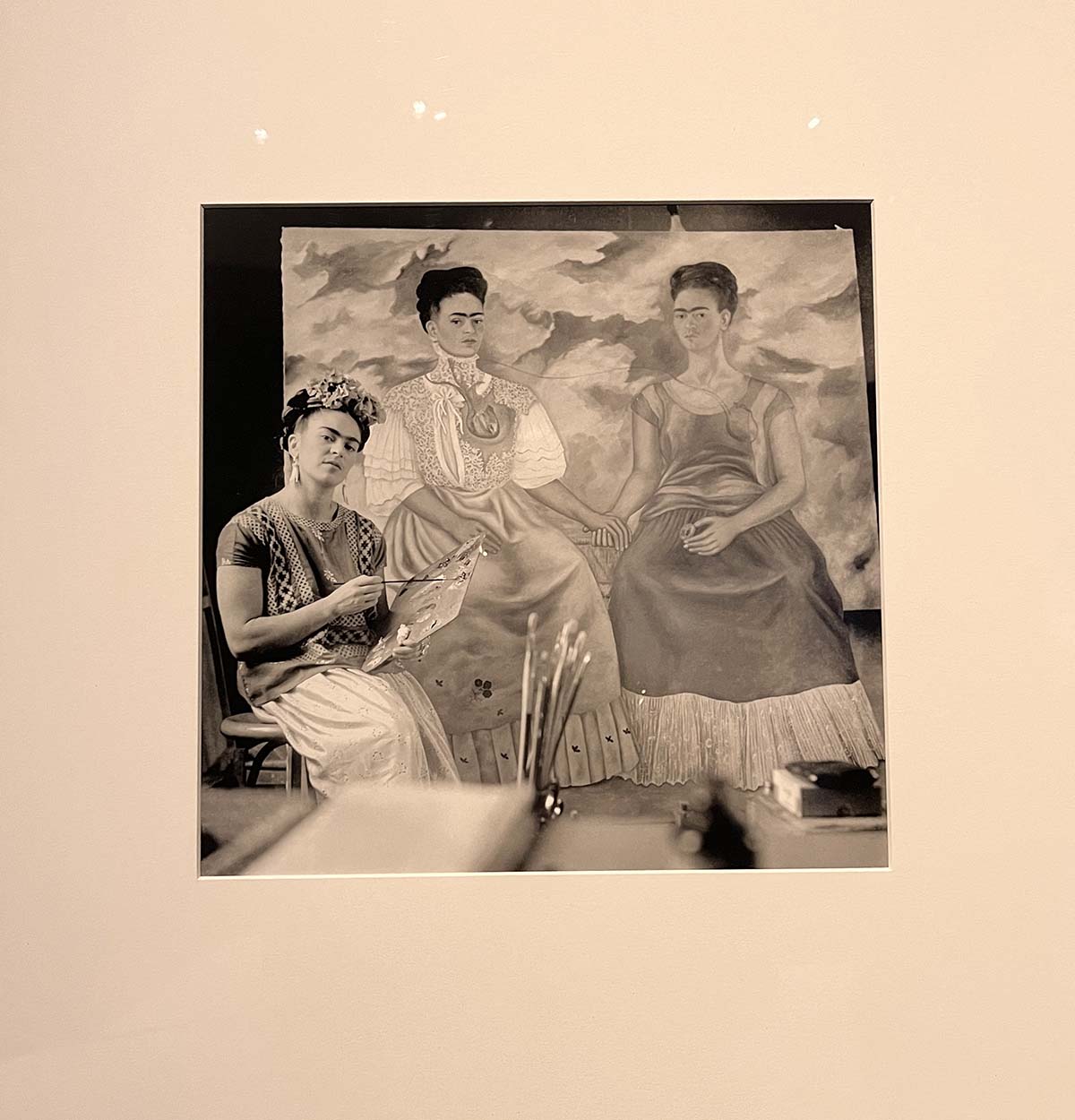
David has since bought me the amazing Frida Kahlo book from Taschen – which is weighty and huge but has the entire catalogue of Frida’s paintings within, so I’ve since been able to really admire the original version of The Two Fridas in color.
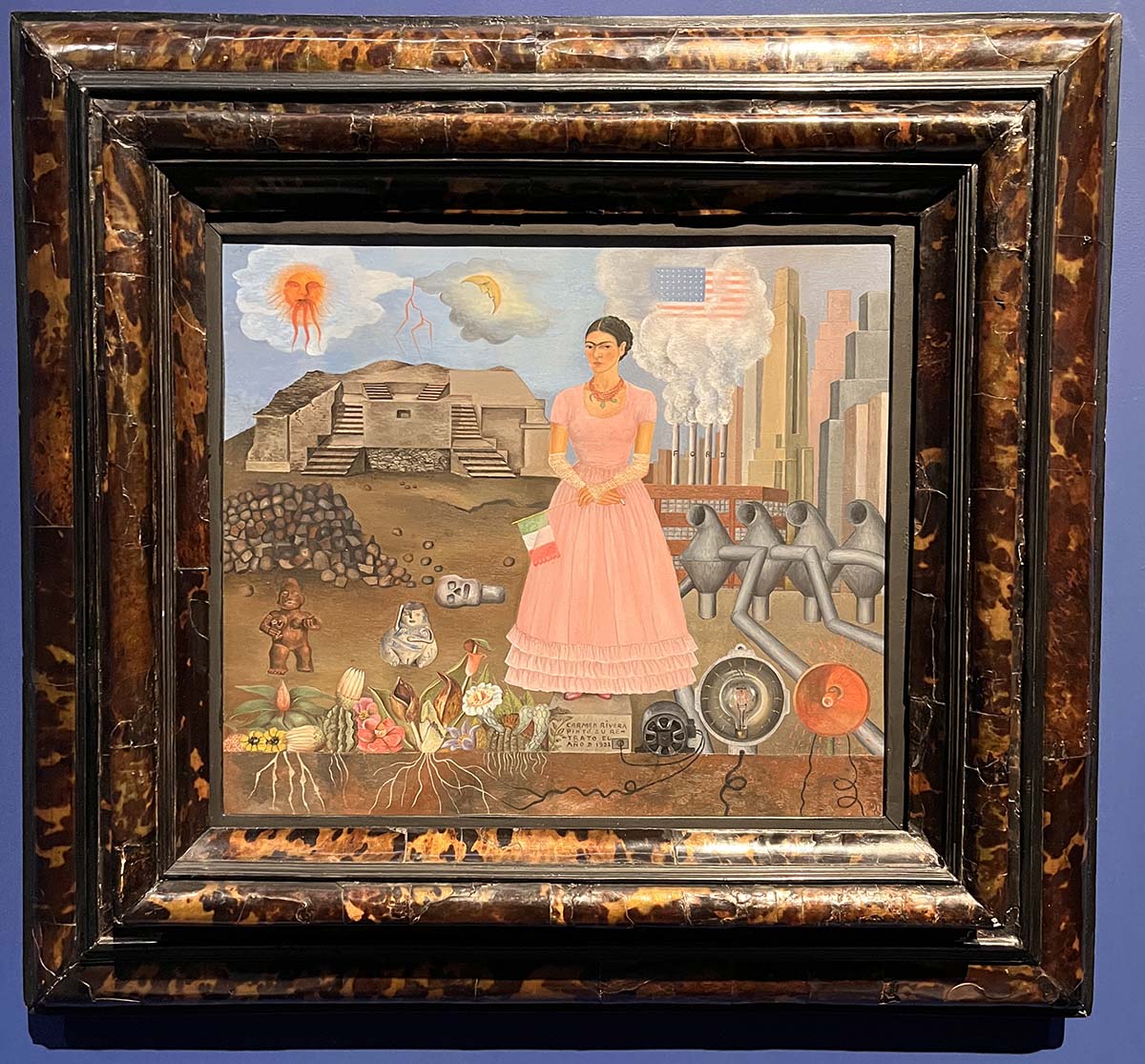
One of the most recognised paintings of Frida Kahlo’s is the Henry Ford Hospital which I couldn’t get close enough to see, let alone capture a photo. In the painting shown above, we do see mention of Henry Ford – which is the hospital in the US where she was treated after a miscarriage.
Without Hope (below) was painted in 1945. It depicts how she was force fed at the insistence of her doctor, having struggled with her appetite after multiple surgeries.
Notice how the easel which would under normal circumstances hold a painting is the support used to force feed her and keep her alive.

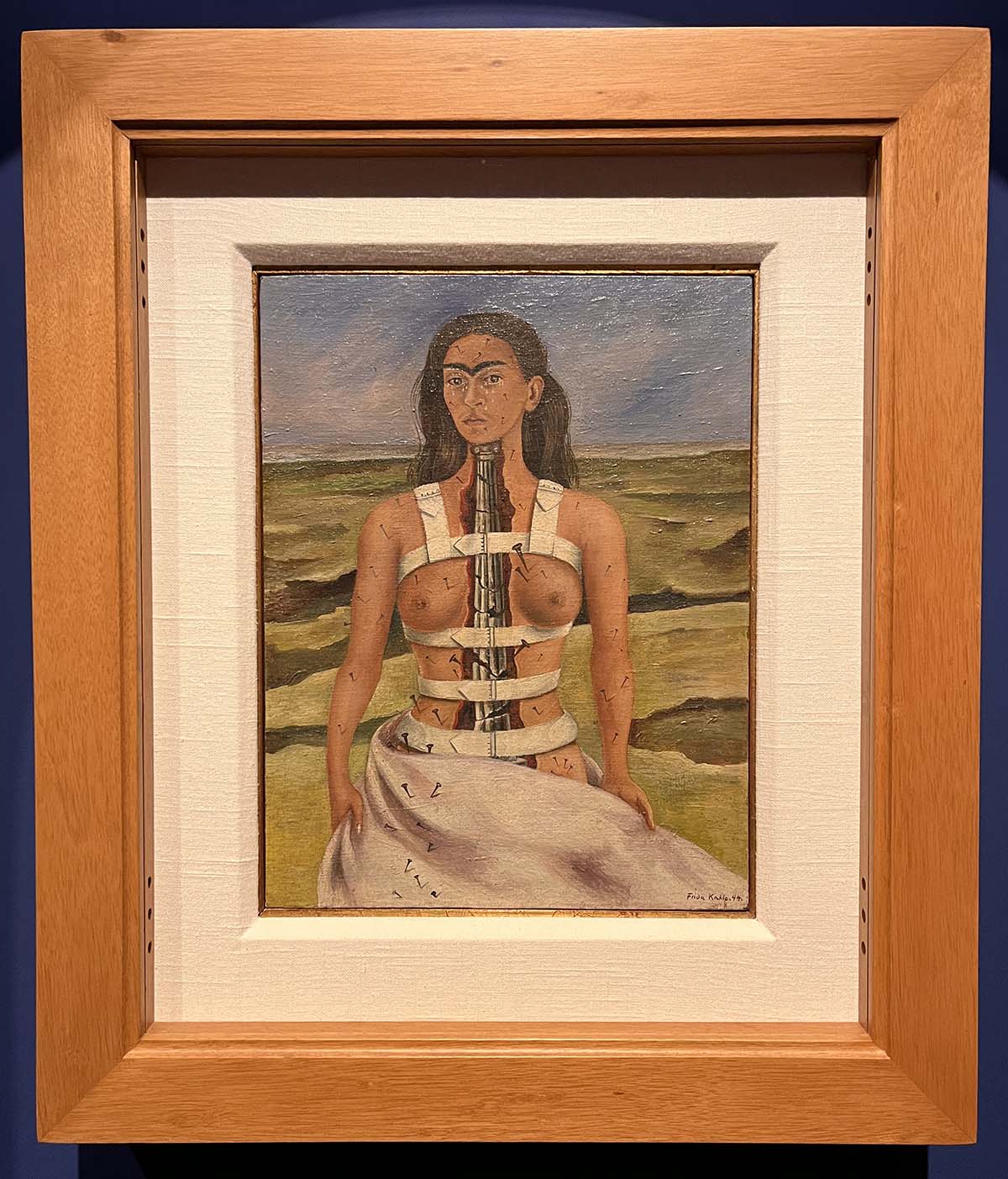
The Broken Column is perhaps for me the most resonant. Painted in 1944, not long after she had surgery on her spine, and just the year before her painting Without Hope, Frida is painted alone, with a crumbling spine – the column – and wearing a corset to hold together her crumbling body.
She is alone. She is broken.
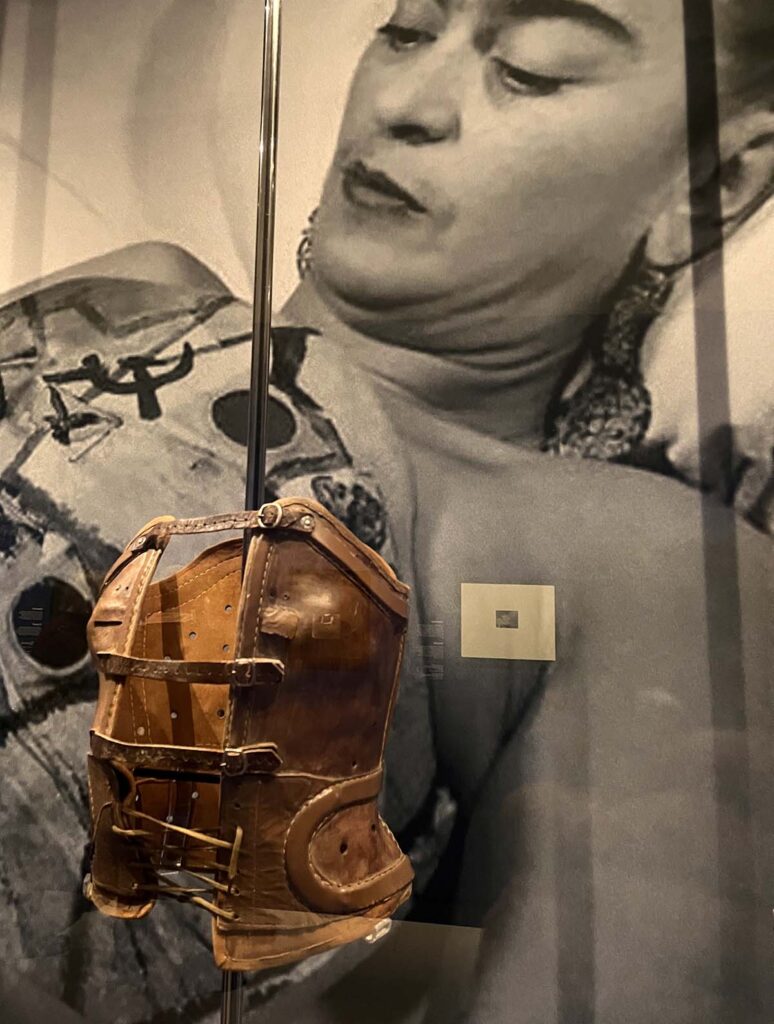
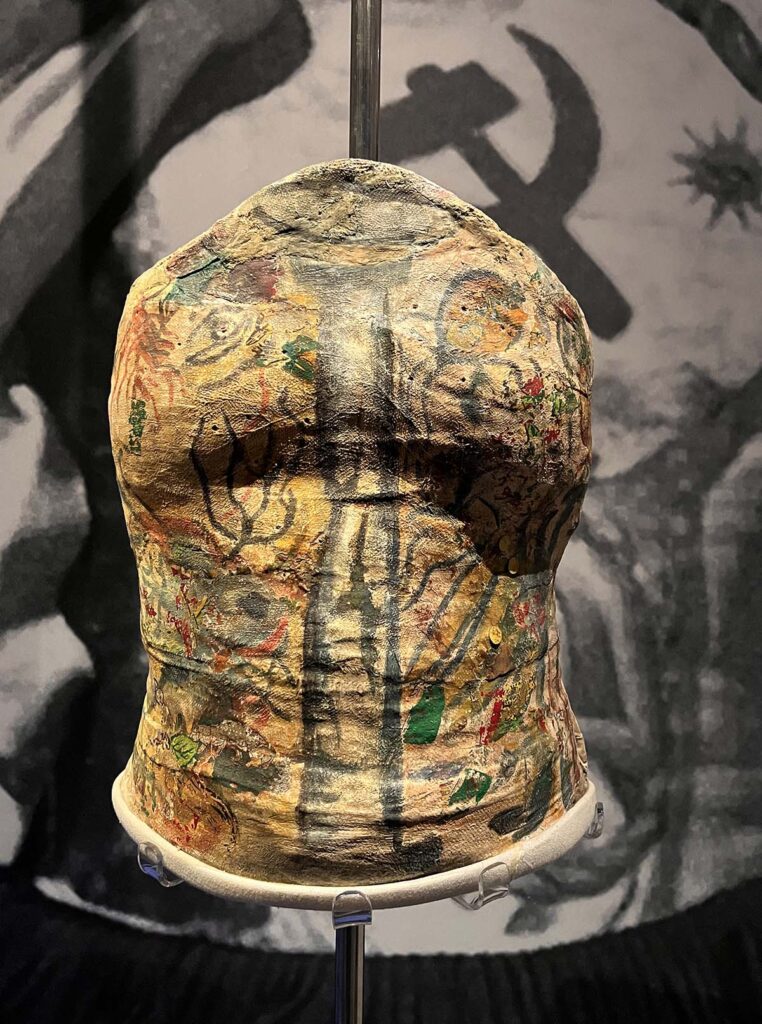
The exhibition also showed the various corsets and plaster casts that she wore in her later years for support. She would often decorate them, and make them pieces of art in their own way.

In 1953 her right leg was amputated at the knee. She became dependent on pain killers, suffered depression and anxiety, and attempted suicide.
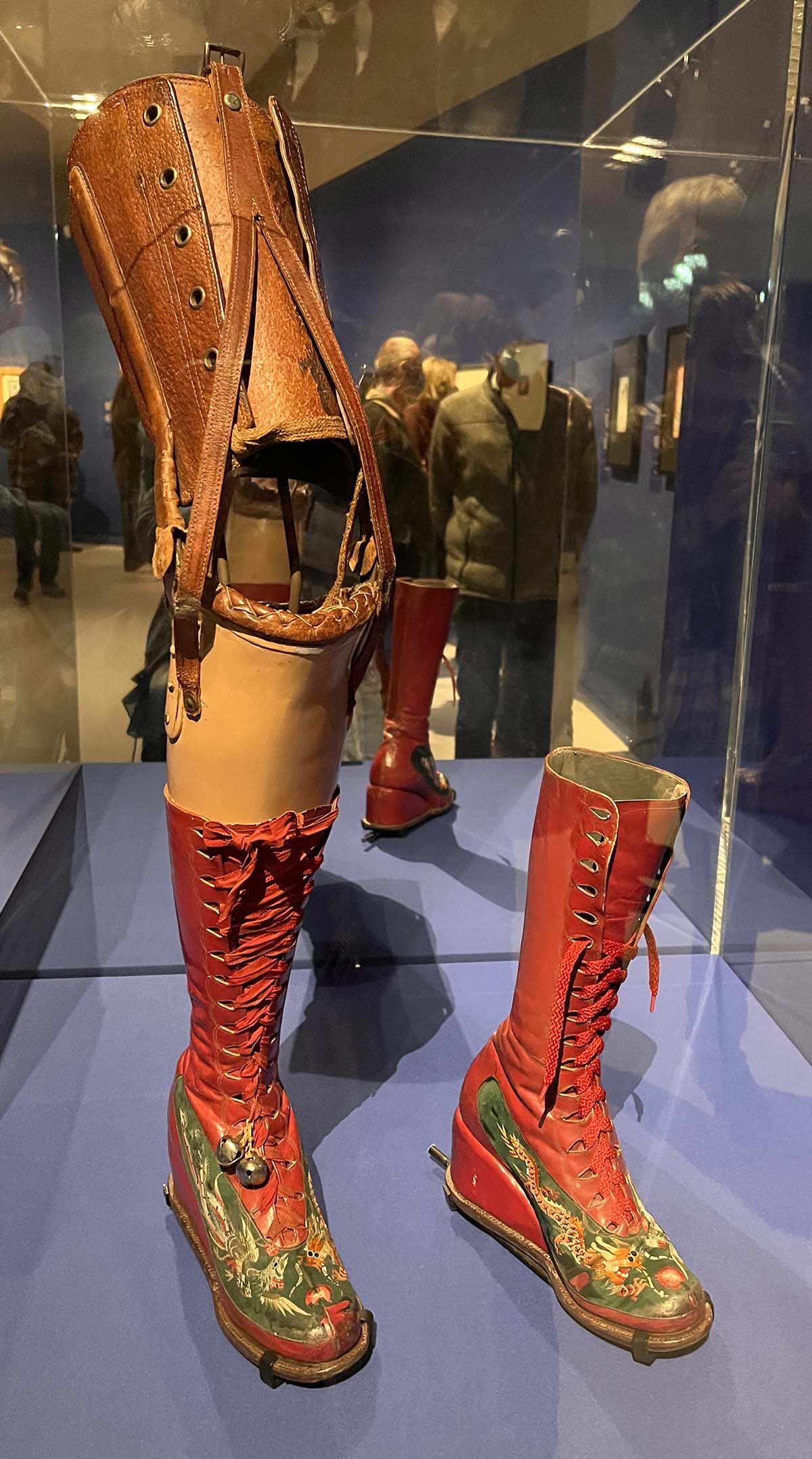
Despite the despair she felt, Frida had a pair of boots made. They were exuberant – bright red leather, embroidered with gold thread and with jingling bells attached. Frida was excited to wear these boots despite the recent amputation of her right leg, and while ‘heavily medicated with painkillers’ danced in them while wearing her prosthesis.
One year later, at the age of 47, Frida passed away.
Frida Kahlo’s Fashion
I cannot end this blog there though. For what of the clothing, the ‘fashion’ that Frida wore which has inspired many designers over the decades since her death?
While I didn’t make a note of everything I saw whilst there, I though I would talk you through the various garments that were on show which I felt most drawn to.

The beautiful colour – pinks, blues, yellows – are all so bright and exciting. But more so to me is the use of all the various textiles within. Panels of hand stitching. Lace appliqués. Gathered sleeves. And ribbon stripes!
To many this would be seen as fashion at its worst, but I love the juxtaposition of all the colours and textiles.
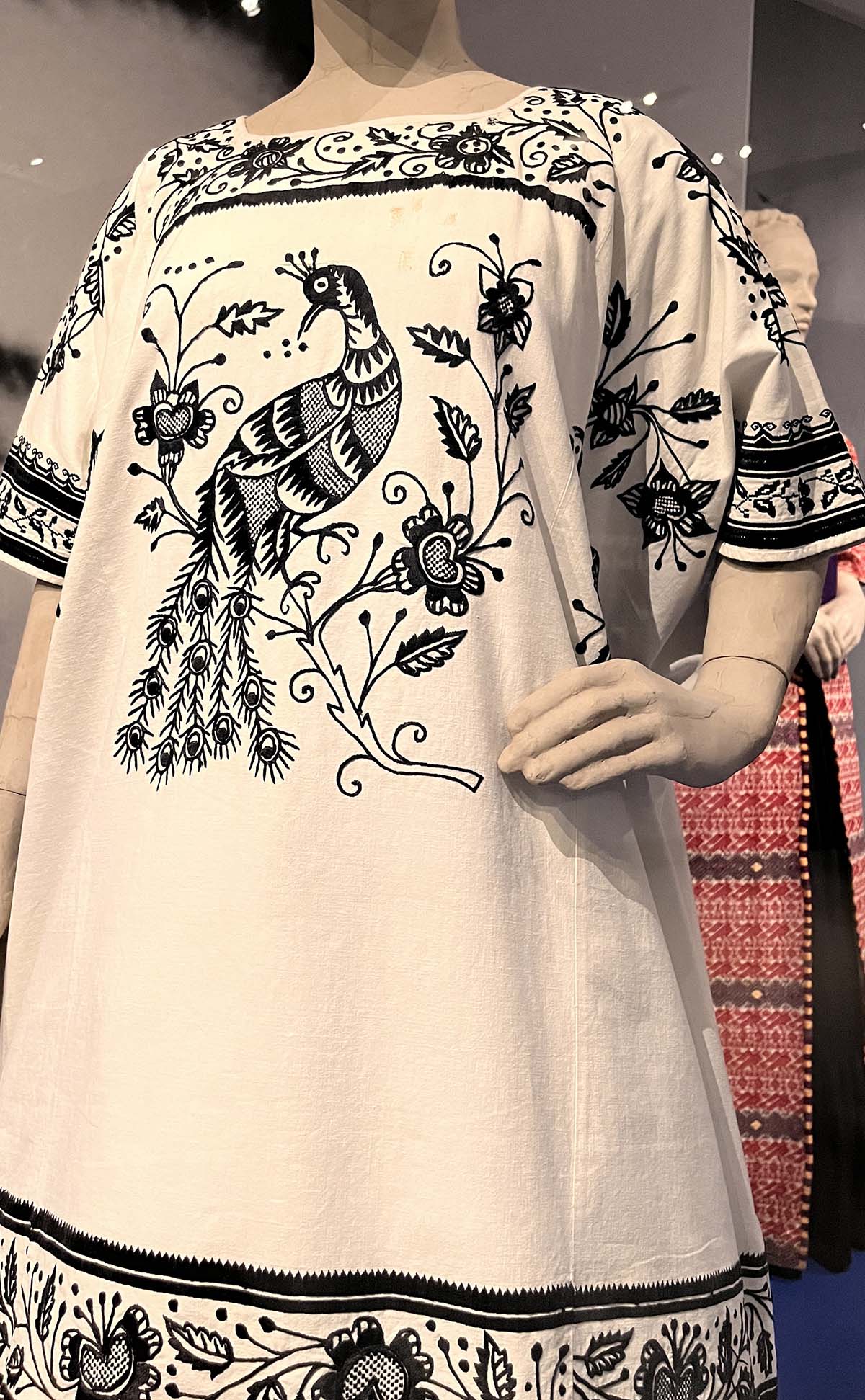
This blouse is called a Huipil. It’s a simple shape, which would be comfortable to wear in the hot Mexican climate, and the skirt seen here is Tehuana in style.
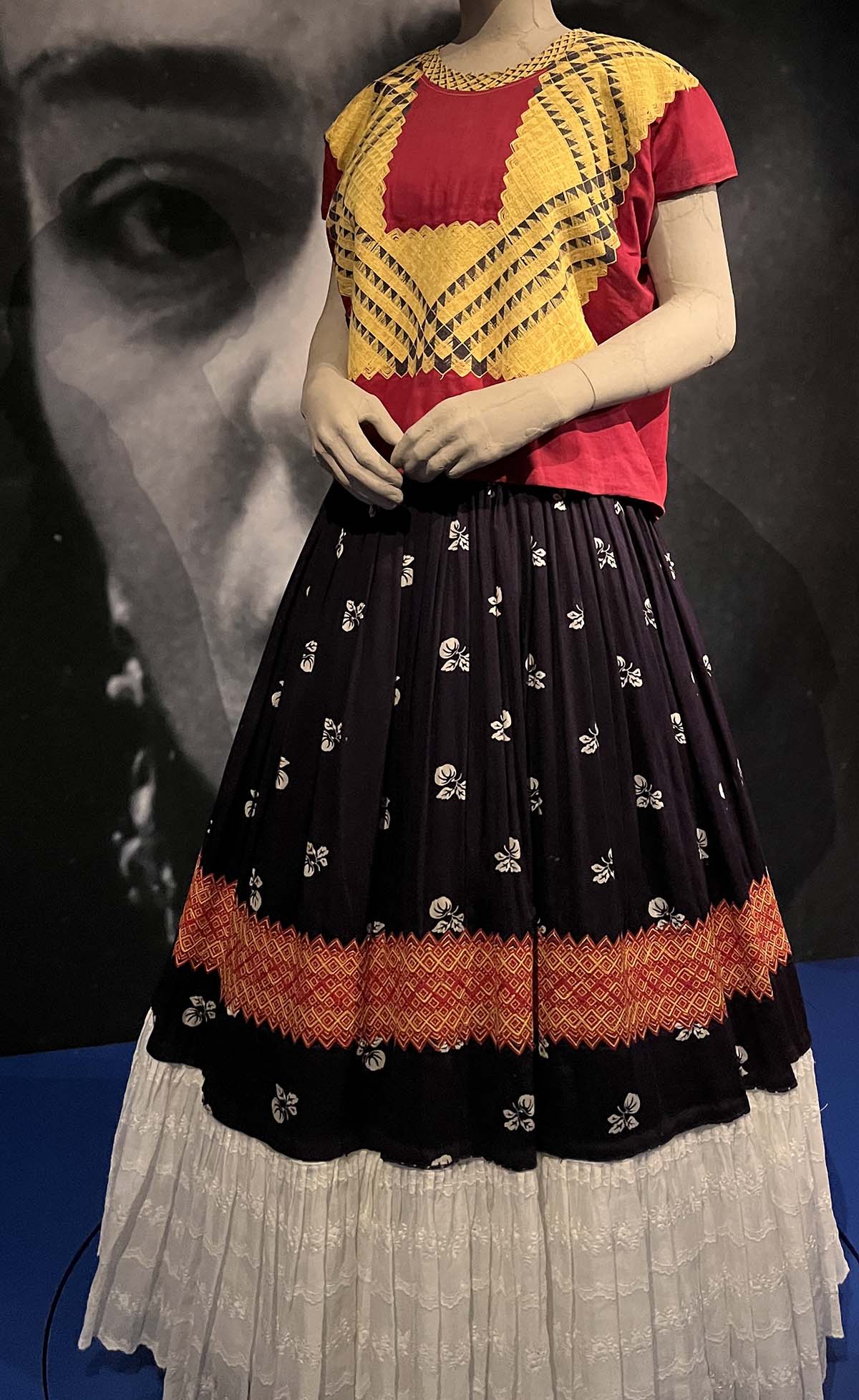
Again, the detail on this blouse is beautiful. We have an upper front bodice piece extending down at the centre front. Sleeves that appear to be grown on and between the two slightly gathered fabric.
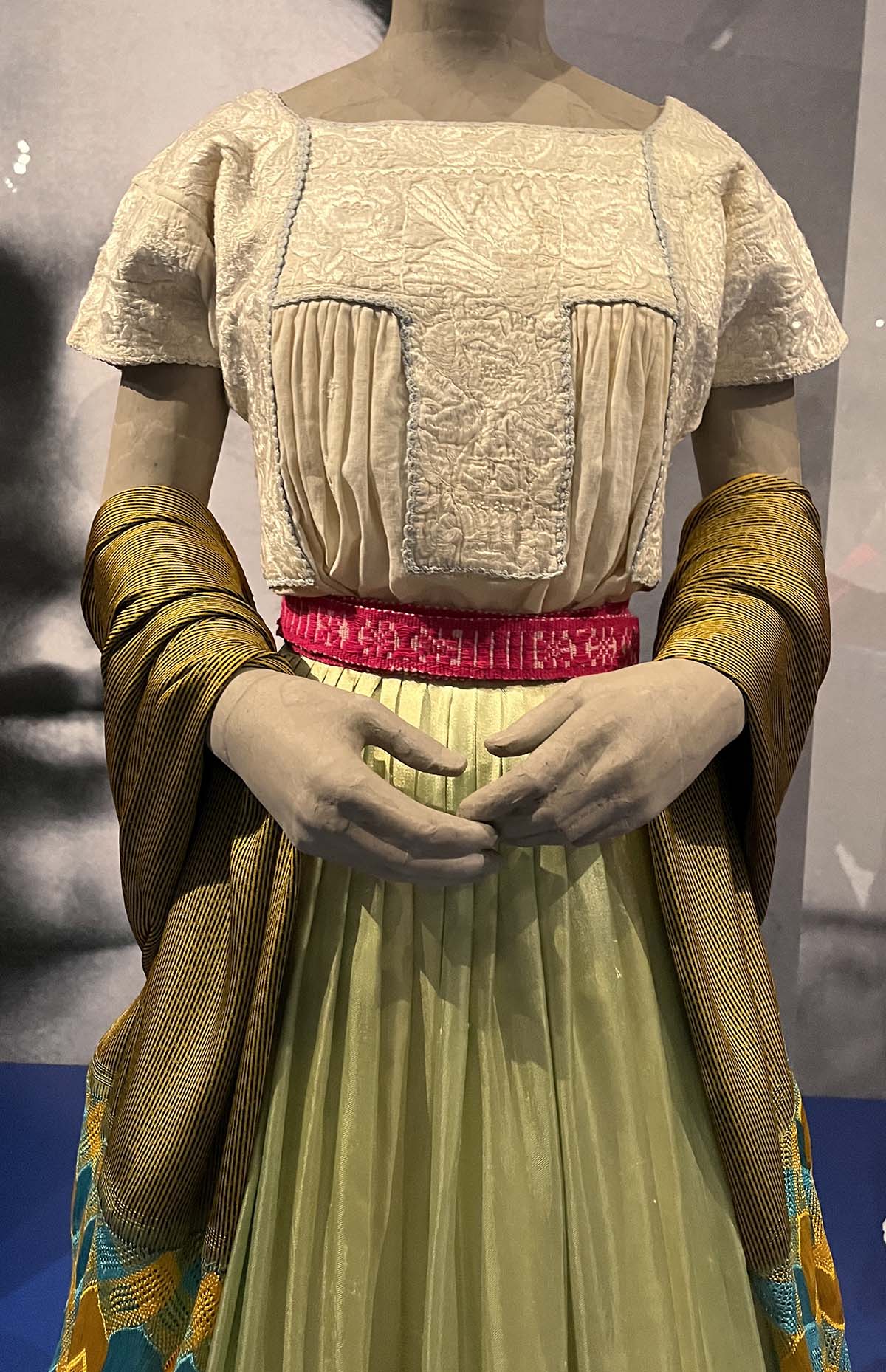
Motifs also featured in the clothing worn by Frida. The peacock on this huipil was a favourite of needleworkers.
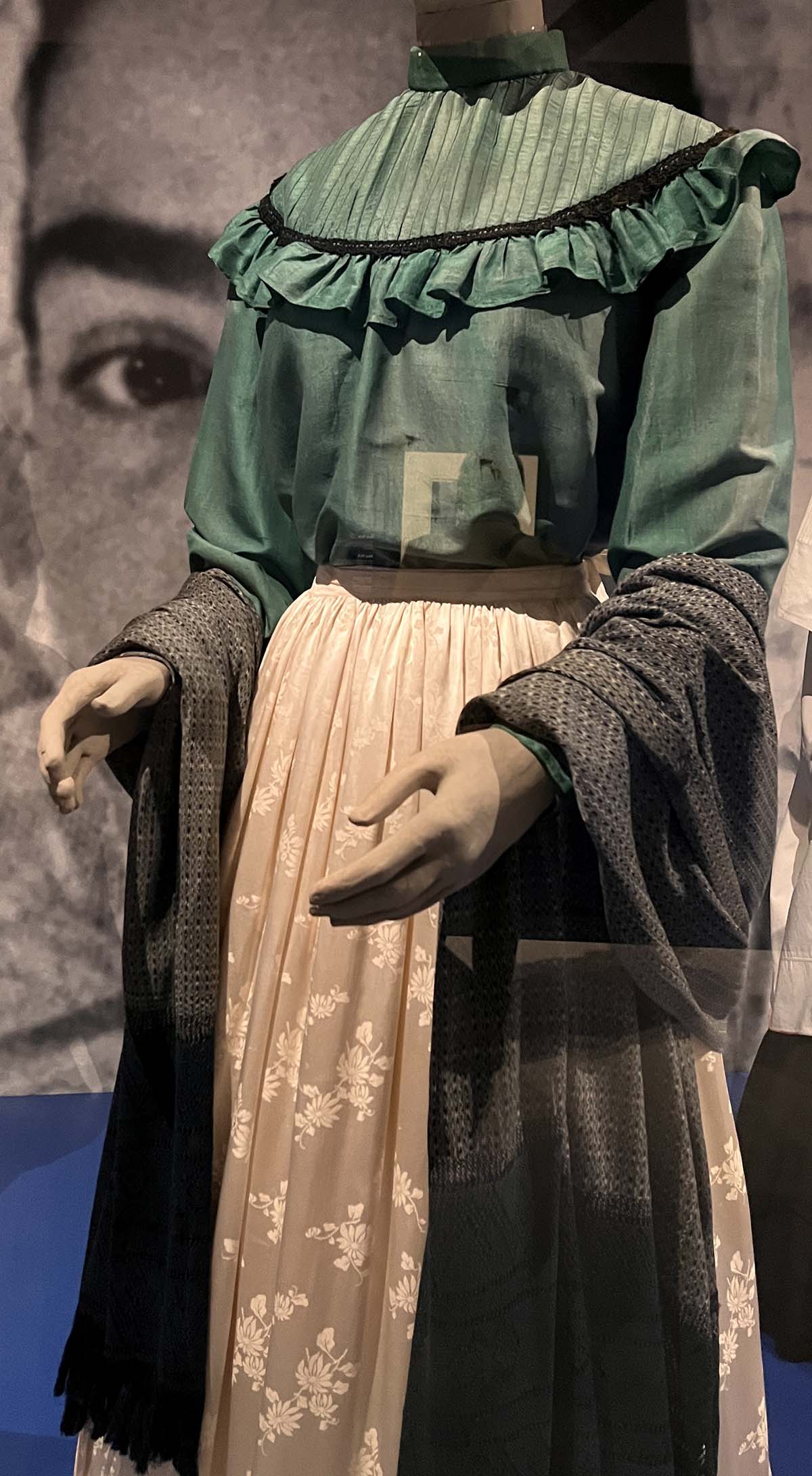
This outfit is quite ‘plain’ when compared to others. Not only is it not intricately woven or decorated. But the colours are also more subdued in their darkness. For me, the interest is in the details. The tucked panel on the blouse, the ruffle. The pairing with an embroidered skirt. And the high neck of a stand collar.
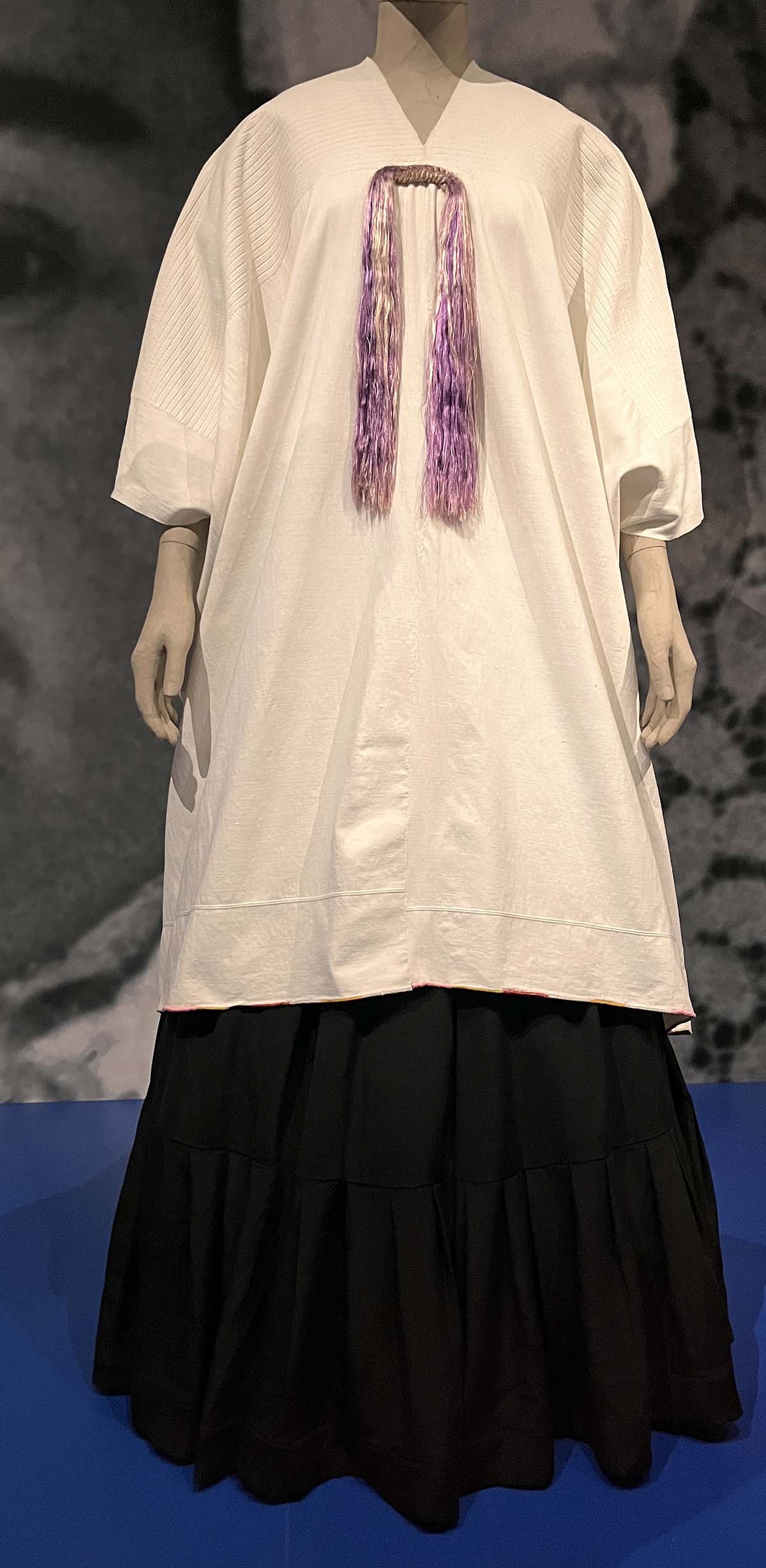
This plain white huipil was worn by Frida on her deathbed. It is a simple handwoven fabric from Yalálag, a Mexican mountain village. There is nothing to decorate it, save the long purple tassel at the front.
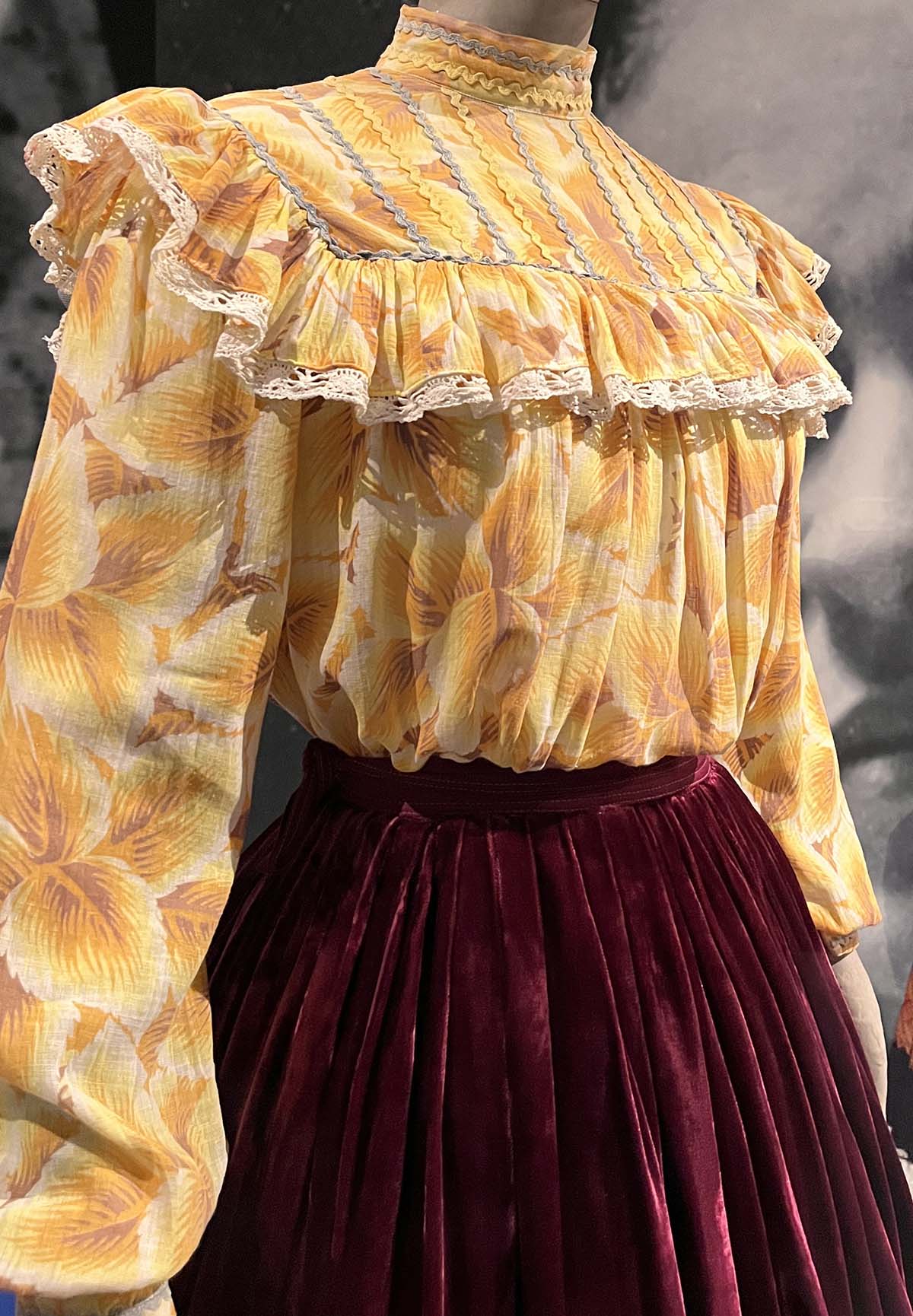
This yellow blouse is beautiful in colour, but also in detail. The ‘rick rack’ appliquéd on both the collar and the upper bodice section. The ruffle, trimmed with a cotton lace trim. And it is paired with a floor length deep purple velvet embellished with golden yellow embroidery. We all know I don’t ‘do’ velvet, but this is beautiful.
Another example of the shorter huipil. In yellow and red, it is paired simple with a black skirt which again has an embroidered band and a printed motif.
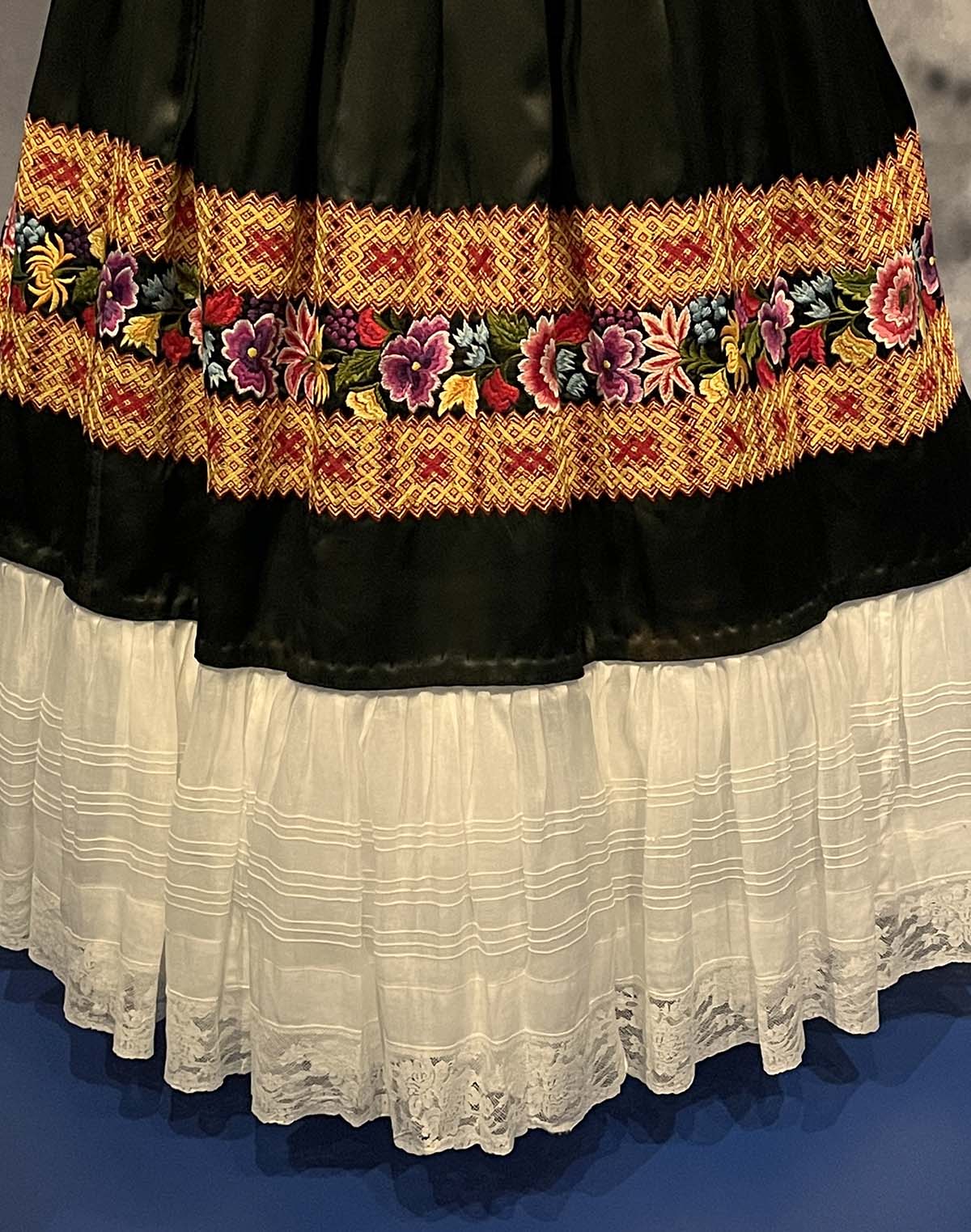
This simple black top is special because of its hand stitched detail.
And finally the rebozo, a scarf with a knotted fringe, and this one in particular being Frida’s favourite.
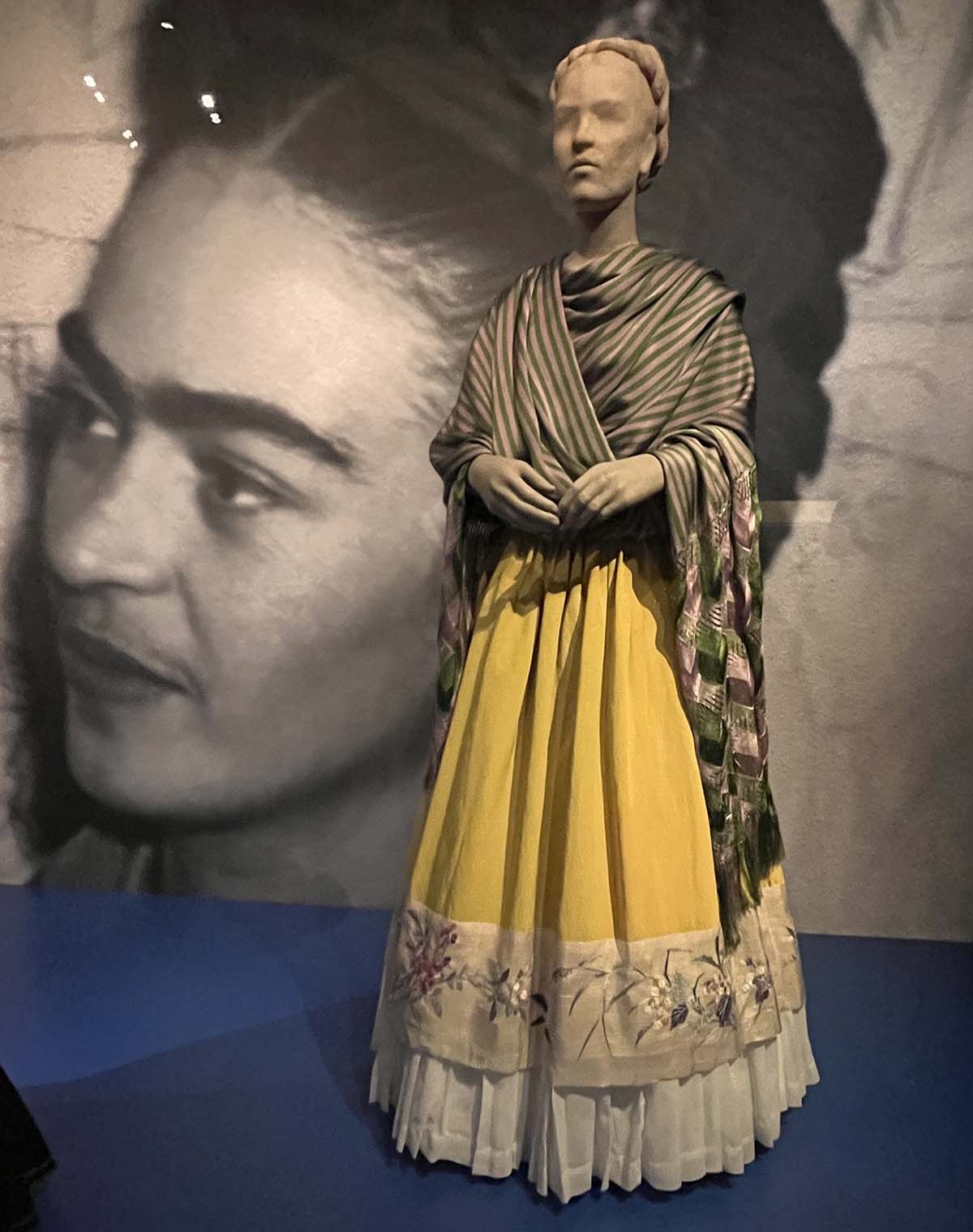
While not quite was we expected to see, the exhibition will stay with me for some time. From a creative perspective I am inspired by her paintings and the clothing she wore, but from a personal angle, I feel a deep sadness for how she suffered throughout her life.
My mum suffered with a disease which saw her spine crumbling away. Witnessing the pain that she suffered was hard – I can only image how much worse Frida suffered from her horrific injuries.
No visit to a museum is complete without wandering the town in which it sits. Sadly, despite being told that Assen was pretty and great for an exploration, I found it to be much like any other town – full of commercial stores and little charm.
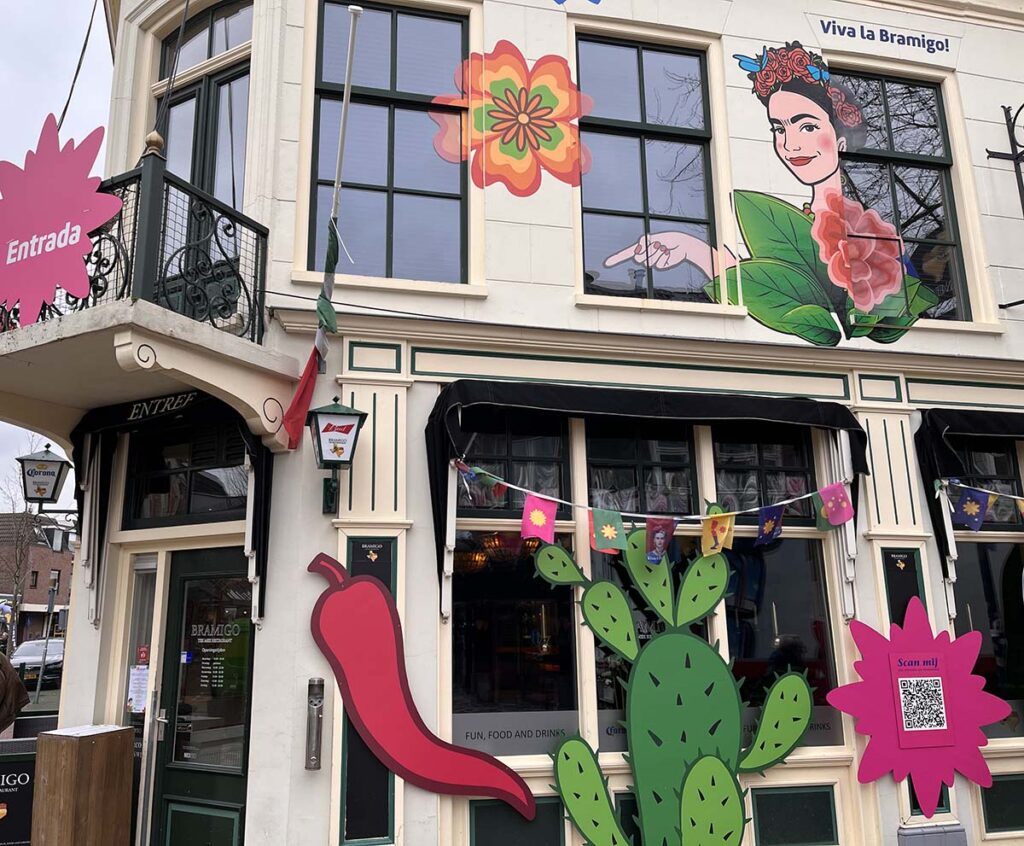
What was very charming was the way that the whole town had come out for Viva la Frida. From restaurant murals, special Frida cocktails and everything in between, Assen has been enjoying the benefits of hosting this amazing exhibition on one of the most feminist of female artists the 20th venture saw.
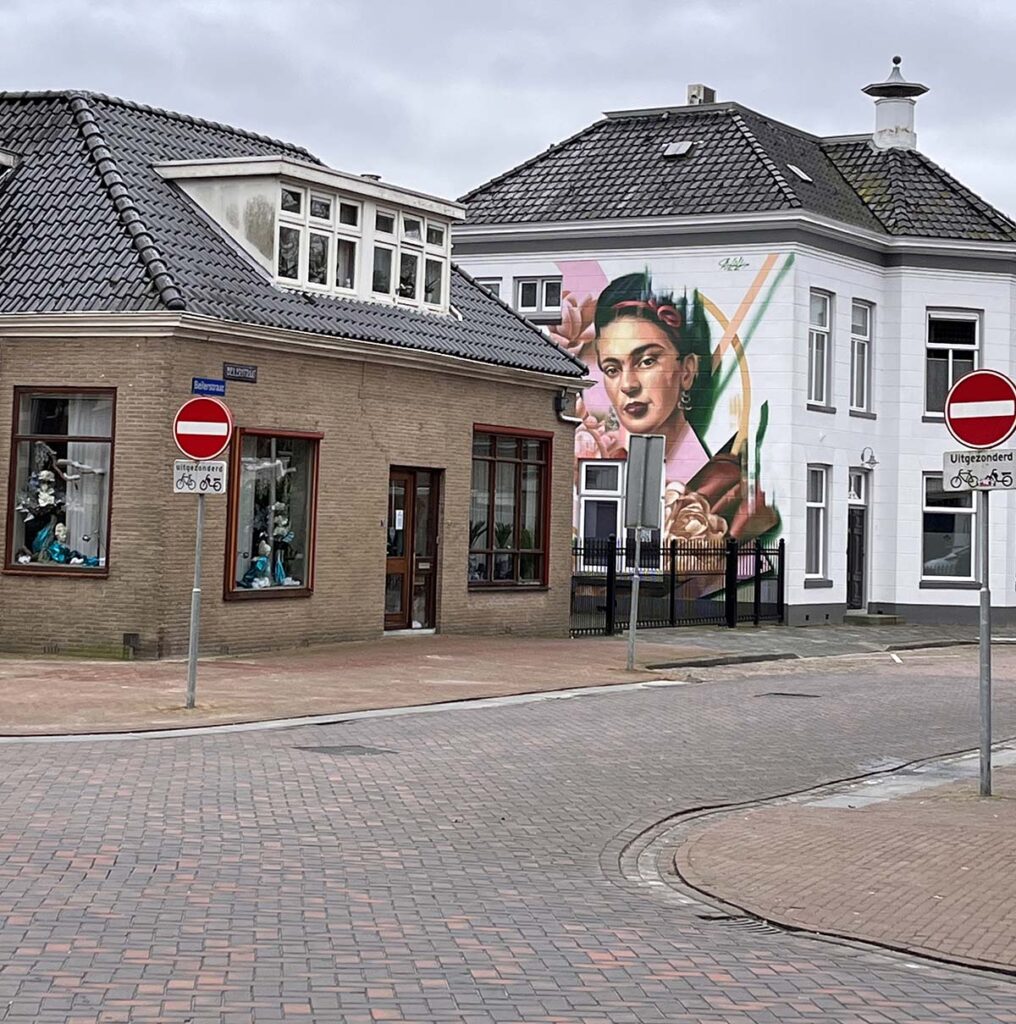
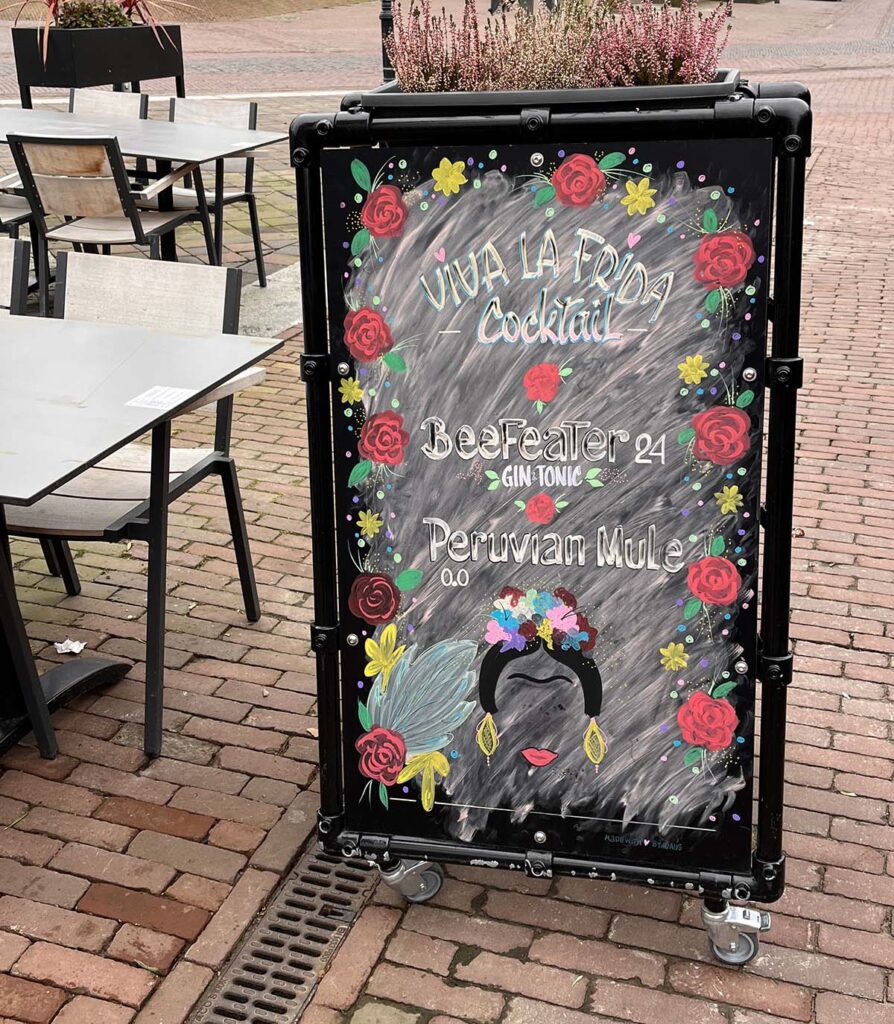
Finally, I hope you enjoyed this review of the Frida Kahlo exhibition in Assen. If you have any questions please do drop them in the comments.
If you enjoy exhibitions, I have some others that you may enjoy reading!
Caravaggio’s fashion and fabrics was a great exhibition in London and then there’s also the Undressed: A Brief History of Underwear exhibition at the Victoria & Albert Museum in London too!