7 Ways That Sustainable Sewing Can Help Save The Planet
One reason I continue to sew my own clothes is to have some control over the sustainability and ethics surrounding what I wear. I call it sustainable sewing.
Last week I ordered two running tops in the sales. It’s the first time I have bought new clothes in quite some time. I think the last ‘new thing’ I bought was a strappy summer top back in the heatwave of spring 2019, and before that, I have no idea. It really is that infrequently that I buy clothes.
I’ve been pottering along, with one pair of natty old jeans, a pinafore dress, a DIY wrap skirt, a pair of banana pants and a handful of tops – some bought, some made and one stolen from my Ma’s ‘1980s stash’ a few years ago.
That isn’t to say I’m against new clothes! Far from it! I love fashion. I love looking at the new designs each February and September when the ready-to-wear fashion shows hit our cities.
I imagine all the things I could buy and wear, and how I’d style them.
And yet, I never buy anything.
Big confession – I even struggle to buy fabrics!
With the climate crisis actually real and not the ‘fake news’ some people would have us believe, I find it hard to ‘treat myself’ to things that have contributed to the state we find our planet in.
I know, I know. Me refusing to buy into the latest trends will not change the way these RTW brands work. I’m just one person, trying to make a very small difference.
The big brands will still create new collections every few months. The high street brands will still have new stock hitting the shop floor every couple of weeks. My going on a buying strike doesn’t impact them at all.
Which is why I now practice what I can sustainable sewing. It makes me feel a bit better about the impact my sewing has on the planet.
Here are 7 ways that you too can sew more sustainably!
Repurposing Existing Fabrics
One of the easiest ways to sew more sustainably is to reuse fabrics that have served their original purpose.
One of the easiest ways for me to do this is to find curtains that are no longer used as curtains and create something new from them.
I have some pink floral curtains – which are threadbare in places! – that were the curtains in my room growing up.
My Ma planned to throw them away, but I grabbed them when home on a visit, and have them stashed away, ready to sew something amazing. It may not be clothing, but I will find a way to reuse this fabric so that it doesn’t just end up in a landfill.
Refashioning Existing Clothes
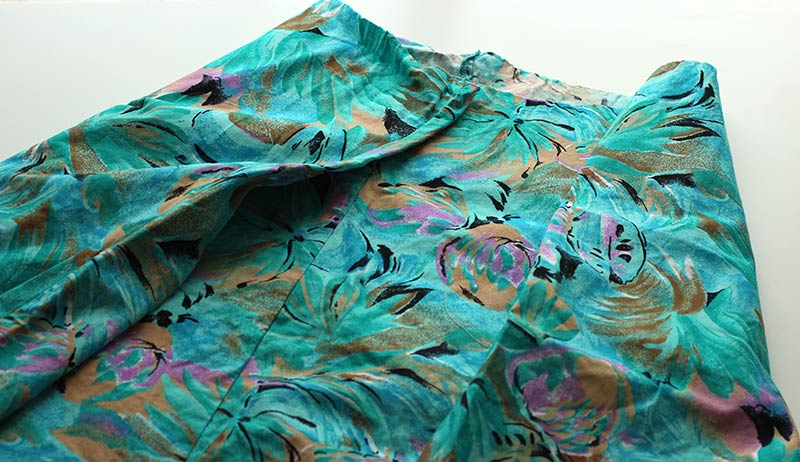
We all have those clothes stashed in the depths of our wardrobe. That item we bought five sizes too big because we loved the fabric / colour / shape and the store marked it down to a crazy price.
Only you’ve never worn it. And it just sits there, waiting for the moths to find it and scoff it.
Refashioning clothes that are too big into something that fits you (and looks better in the process!) is a great way to have something new to wear without going out and buying something new.
And if it happens to have been an item that you loved, but which no longer fits you, refashioning it into something that does fit – either making it smaller so that it fits better, or adding other fabrics to make it larger and better fitting – is a great way to get maximum wear from that original loved item!
Charity Shop Buys
The third method on my list is to avoid buying new and hit the charity shops / thrift stores.
This is one of my favourite ways to ‘buy’ new fabric.
I personally stay away from the ‘refashioned men’s shirt’ look because I feel there are plenty of men out there who would and could wear a second-hand shirt. Me chopping it up prevents that and the fabrics of the shirts I find in charity shops are usually a bit ‘work shirt’ in style.
Those times when I find a cool, funky print though – they’re fair game, and I’ll happily take it apart and use it for something new!
If you do have old work shirts at home – or even funky print ones that have served their purpose! – they make great pocketing fabric when sewing jeans or trousers with pockets!
Besides a vast supply of men’s work shirts though, there’s always a good selection for women’s clothing in charity shops too.
I do avoid the man-made fibres, preferring natural fibres like cotton and silk. But, if the print or shape is interesting to me, I will succumb!
Sustainable Fabrics
Another way to sew more sustainably is to only source fabrics that are sustainable.
Ideally, these should be fair trade and organic which tells us that:
- The fabric makers did not exploit anyone when producing the fabric
- No environmental damage from chemicals took place
Obviously, it is really hard to completely trace the origins of every fabric we come across, but we can start by buying from small businesses that have the same sustainability values and responsibilities that we do, and who source their fabrics very carefully.
By ensuring that the manufacturing of these fabrics is fair trade, we can sew knowing that along the chain, people received fair treatment, from the grower of the cotton to the weaver in the mill.
And by ensuring that fabrics are organic, we can feel safe that there is less harmful damage to the environment local to where they created the fabric.
As an example, leathers at tanneries in India are known to contaminate the water system with chemicals and dyes, making the water unsafe to use. And it isn’t just the manufacturing of leather, but other fabrics and the cleaning and dyeing processes.
Some great companies that do source beautiful ethical and sustainable fabrics are:
- Offset Warehouse – Charlie at Offset Warehouse sources the most incredible and sustainable fabrics that can be used to sew your own clothes, but also for anyone who likes to make their own home furnishings!
- Organic Textile Company – a vast selection of organic cotton based fabrics, they have been selling great fabrics online (and worldwide!) since 2005!
- Queen Of Raw – based in the US, Queen of Raw sell a mix of sustainable and ‘headstock’ fabrics – my kind of place to buy fabrics from!
- Organic Cotton plus – US based suppliers of organic fabric for quite some time, their farm has been organic cotton farming since 1991!
- True Colours Textiles – suppliers of eco-friendly fabrics: fair-trade, naturally dyed and organic! Love them!
Minimal Hardware Usage
One way to sew more sustainably is to limit the amount of hardware used in your sewing projects.
To be fair – if you sew your own clothes, you’re probably a bit of a hoarder like me, and cut off buttons / unpick zippers before getting rid of clothing that is no longer functional.
But we can also, at the actual sewing and construction stage, consider the hardware we need.
Do we really need it? Is there another way we can achieve the same effect, perhaps using hardware that is decomposable?
I designed my fanny pack sewing pattern to not have a zipper because I figured it would be more likely someone would snip off the rings and buttons than unpick or cut out a plastic or metal zipper.
Starting with the end of the sewing project in mind can often make us think of interesting ways to not use items that won’t decompose if they end up in a landfill.
Fibre Content
If needs must, and you want / need to buy new fabric, and cannot source fair trade or organic fabrics, another option is to consider the fibre content of the fabric you are buying.
Natural fibres are those found on the planet naturally, either as plant-based or animal-based fibres, while man made (synthetic) fibres are created from chemicals.
It’s well known that synthetic fibres – often derived from petroleum – are filling our oceans and the bellies of fish with tiny particles every time we launder our clothes, so you can consider opting for a fabric made from natural fibres as a more sustainable option.
Common fibres created naturally are:
- Cotton
- Wool
- Silk
- Linen
There is, of course, consideration needed for the processing of both natural and synthetic fibres. Growing, harvesting and cleaning cotton so that it is a usable fibre is actually one of the most harmful processes of all fibres to our environment.
Only the fact that it will degrade faster over time than synthetic fibres gives it some value over Polyester.
Using Natural Fibre Thread
An odd one perhaps to finish with, but as most thread is made from Polyester, I think it is a good contender for sewing more sustainably.
We know that polyester takes between 20 and 200 years to decompose, so by using a natural fibre based thread, we can ensure that the clothing we make for ourselves, and in the future dispose of, will be made of stitches that will decompose in a much shorter period of time.
There you have it – seven ways that you and I can sew more sustainably! Questions? Comments? Drop them below!